
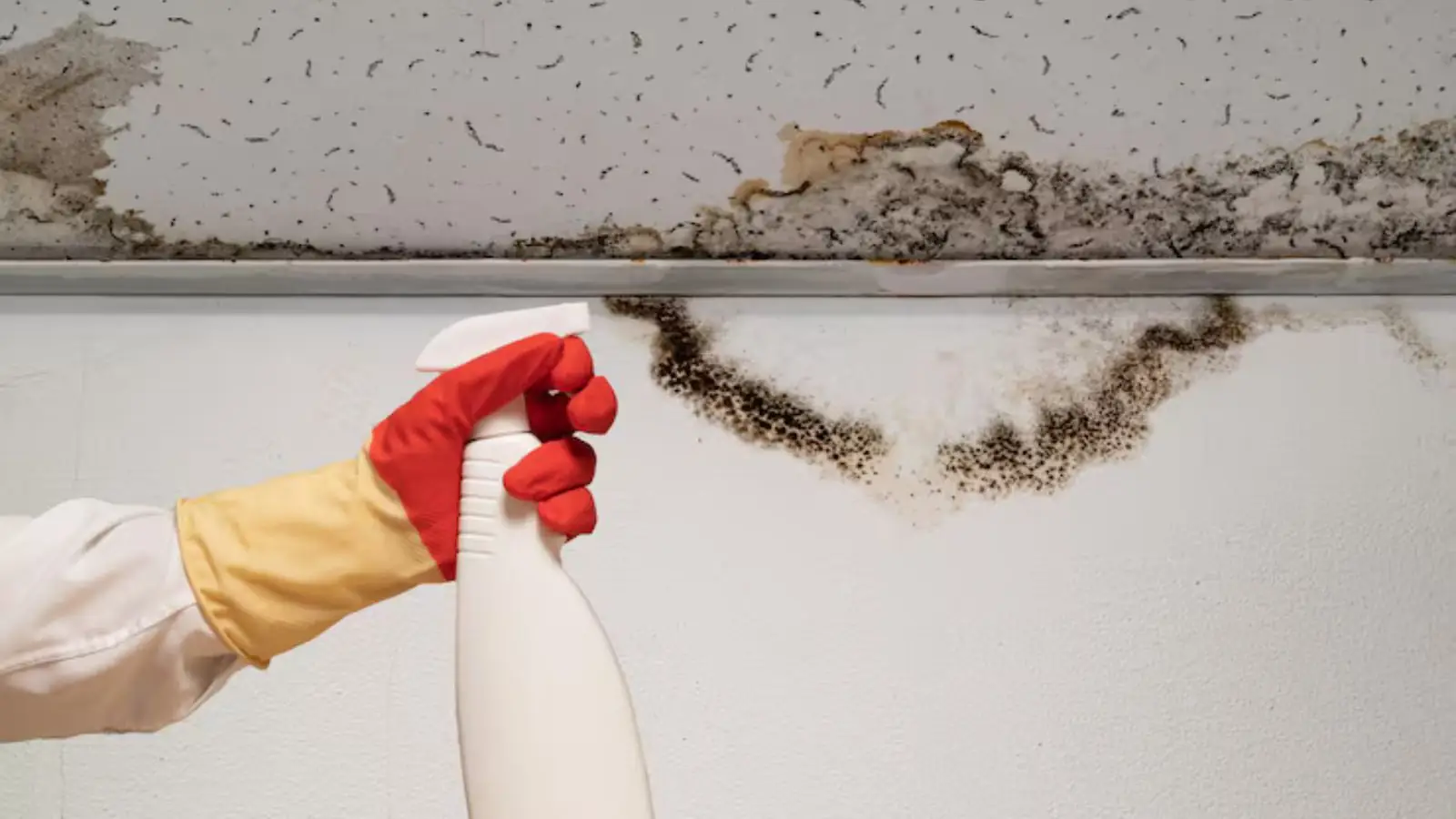
Two stories behind the same dark spots
Black growth on a bathroom ceiling is usually surface mold fed by shower steam and a weak exhaust fan, though sometimes it is a leak from the room above or from the roof. Telling them apart decides the repair. Steam stains can be cleaned and the fan fixed. A leak means the ceiling material has been wet from the other side.
Color alone cannot identify a mold. Only lab testing can, and the first move is the same either way: find the moisture. For small surface patches, a homeowner can often clean them. For leaks or large areas, mold remediation is the safer route.
The EPA's guide to mold puts it simply: the key to mold control is moisture control, so a fan that moves steam outdoors does more than any cleaner.
Clues that point to steam, and clues that point to a leak
Walk through these before you pick up a sponge.
- Spots in the corners and above the shower: Steam rises and condenses on the coldest surface, so growth often starts where the ceiling meets an exterior wall. That fits a ventilation problem.
- A ring-shaped brown stain with a dark edge: Water has soaked the ceiling and dried in rings. That points to a leak, not steam.
- Stain that grows after rain or after the upstairs shower runs: Roof or room-above plumbing. Note the timing and tell the person who comes out.
- Paint peeling, bubbling or flaking in sheets: Moisture is getting behind the paint. Surface wiping will not fix it.
- Ceiling that feels soft or sags: Treat it as wet drywall and keep people clear. See the safety note below.
- Fan that rattles but barely moves a tissue held to the grille: It is not clearing the steam, no matter how loud it is.
Two or more leak clues mean you should call before cleaning. Cleaning a wet ceiling only hides the evidence.
Fixing the humidity side
If the clues say steam, these changes do most of the work.
Vent outdoors, not into the attic
A bathroom fan that dumps into an attic or soffit pushes steam into the space above the ceiling. The duct should run through the roof or wall to the outside, insulated so it does not sweat.
Run the fan longer
Leave it on for 20 minutes after the shower. A timer switch or humidity-sensing switch takes the guesswork out.
Check the airflow
Dust-clogged grilles and crushed flex duct choke a fan. Cleaning the grille is a five-minute job that helps.
Redo failed caulk and grout
Gaps at the tub, around the shower valve and along the tile let water into the wall cavity. Remove old caulk fully and apply fresh mildew-resistant sealant to a dry surface.
Ceiling stained and soft?
Call the 24/7 line. Same-day response is offered when available, and scope and price are explained before work starts.
Surface growth or a leak: what to do next
Use this table to decide who handles it.
| Situation | Probably | Next step |
|---|---|---|
| Small spots, ceiling firm and dry, fan weak | Surface growth from steam | Clean hard surfaces, repair the fan and vent path, dry the room |
| Spots plus a stain ring or peeling paint | Moisture behind the ceiling | Find the source, then cut out and replace affected material |
| Stain appears below an upstairs bathroom | Leak from the fixture above | Shut off water to that fixture and call for water damage repair after drying |
| Patch larger than about 10 square feet | Larger moisture problem | Call a remediation crew, do not scrub |
| Growth returns within weeks of cleaning | Moisture source still active | Moisture mapping with a meter and thermal camera |
The EPA says small areas of about 10 square feet or less can often be handled by the homeowner, and larger areas or significant water damage need more extensive remediation.
Before you scrub overhead
Wear gloves, goggles and a respirator, because cleaning overhead drops debris on your face. Put plastic on the floor and tub, and do not sand or scrape moldy paint dry. If the ceiling sags, stay out from under it and call.
Questions about health symptoms belong with a physician. A cleaning guide cannot diagnose them.
Caulk, grout and the room above
Leaks from above are easy to miss because the bathroom ceiling is the last place the water shows. A tub with failed caulk upstairs can drip into the wall cavity for weeks, then appear as a stain below. Look at the tub edge, the shower valve trim and the floor around the toilet in the room above, and press on the floor near the tub for softness.
Roof leaks follow a similar path in top-floor bathrooms. A cracked plumbing vent boot or lifted flashing lets rain run down the pipe and spread across the ceiling. If the stain grows after rain and not after showers, the roof is the first suspect, and a roofer should look at it while a restoration crew dries the ceiling.
Once the source is fixed, the damaged material is dried and either cleaned or cut out. Water damage repair then rebuilds the ceiling. Painting before the readings are normal only hides the problem.
What Southbridge's older housing means for bathroom ceilings
The town's 2024 draft hazard mitigation plan reports that about 81.6 percent of occupied units in Southbridge were built in 1979 or earlier. The plan relies on older Census estimates, so treat the number as a guide.
In practice, a bathroom in a house of that age may have a small old fan, no fan at all, or a fan ducted into the attic instead of outdoors. Older houses also tend to have plaster ceilings and bath fixtures that have been replumbed over the decades. That is why a bathroom ceiling stain here deserves a look at the duct path and at what sits directly above, not just a scrub.
Homes in Charlton and Sturbridge share the same issues in older buildings, and the same dispatch line covers them.
Frequently asked questions
Color does not tell you what kind of mold it is, and a guide like this cannot speak to health effects. If someone in the home has symptoms, talk to a physician. Either way, fix the moisture source and clean or remove the growth.
Yes. A fan that exhausts into the attic puts steam into the framing above the ceiling. The duct should run to the outdoors through a roof cap or wall cap, with insulation on the duct in cold spaces.
On painted, firm drywall, many people use a detergent scrub first. Bleach affects the surface only and does not fix the moisture. Never mix it with other cleaners, and leave soft or stained material to a professional.
Watch the timing. A stain that grows when the upstairs shower or toilet is used, or one with a brown ring, points to the room above. Turn off water to that fixture if you can and have the area checked with a moisture meter.
Not alone. After the ceiling is clean and dry, a stain-blocking primer and a mildew-resistant paint help, but only if the moisture is gone. Painting over active moisture just hides it.
Add one, vented to the outdoors, and sized for the room. In older homes the ceiling may be plaster, so ask the installer to check the framing and the roof path first. For local rules, ask the Southbridge building department.