
A musty smell or dark spots after a leak: what to do next
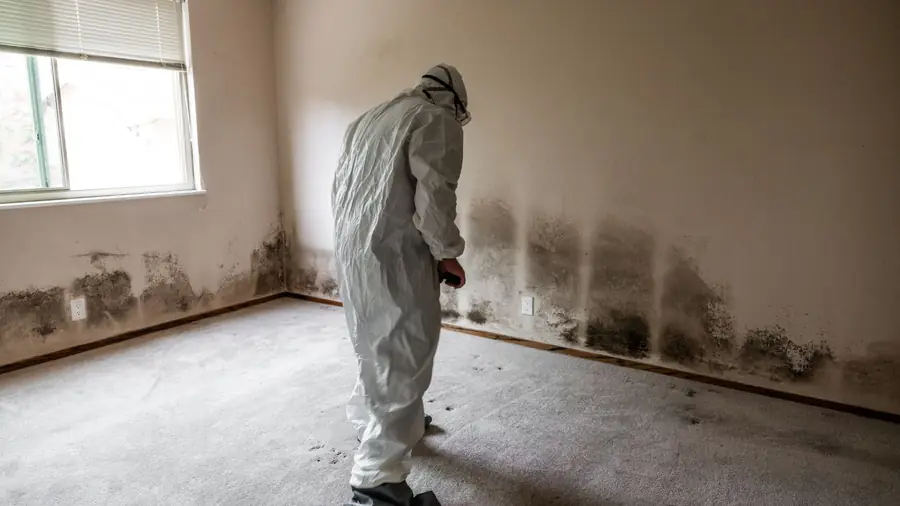
A musty odor in a closet or basement, or dark spots on a ceiling after a leak, usually means something stayed wet. The spots can be mold, dirt or old water staining, and only a proper assessment can tell them apart. Do not scrub or sand the area, since that can spread material into the air.
The first question is where the water came from. If the source is still active, it needs to be fixed. Then the area is assessed, and the remediation plan is built around how far the moisture traveled, not just what you can see. Health questions go to a physician.
Mold Removal and Black Mold Cleanup
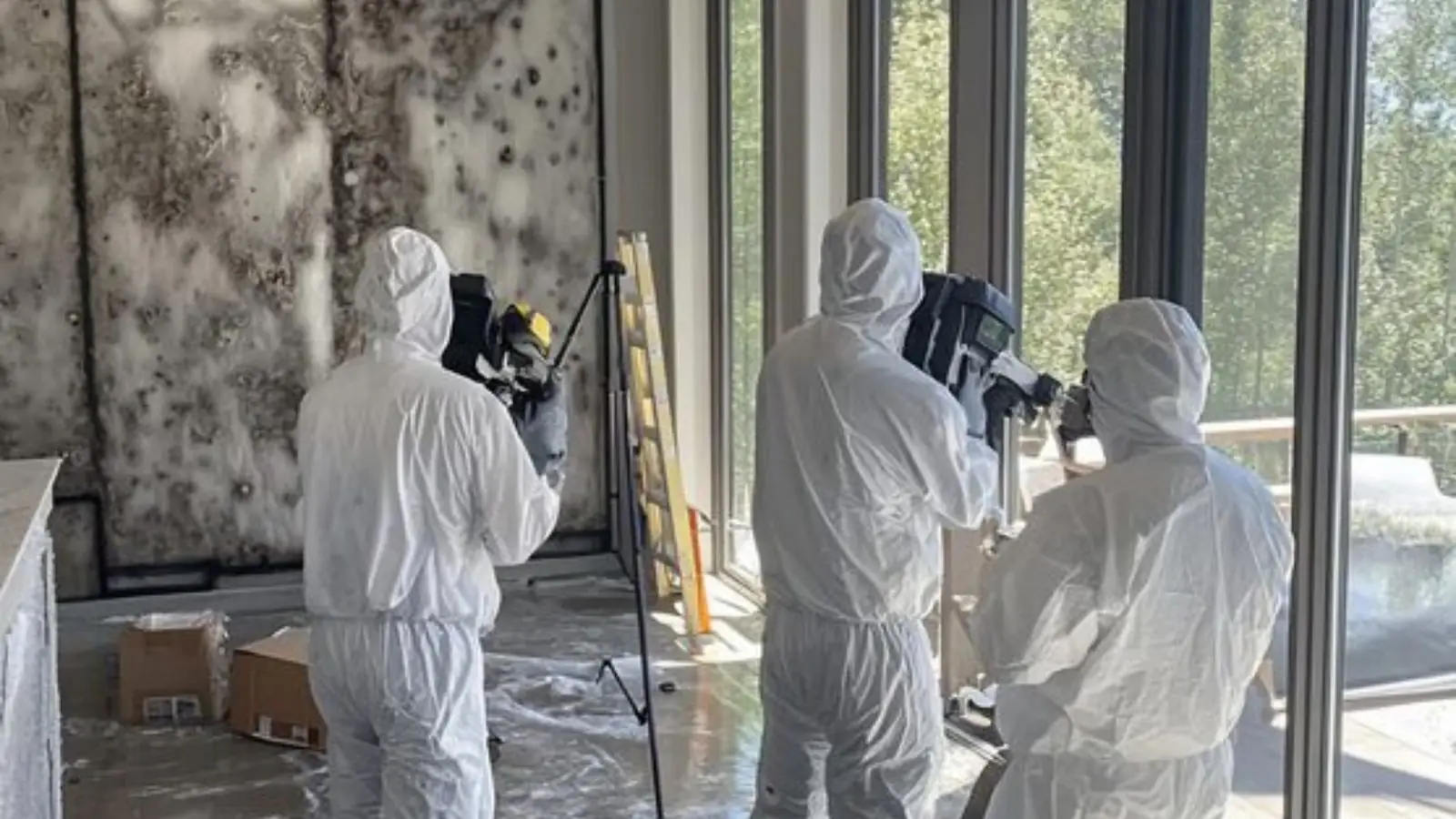
Mold removal means taking mold out of the building, not just treating the stain. Dark growth is often called black mold, but color alone does not identify a species, and color does not decide the method. The work is the same careful process for any visible growth.
A crew sets up containment around the affected area, runs negative air with HEPA air scrubbers, and removes materials that cannot be cleaned, such as soaked drywall, insulation and carpet pad. Framing and other solid surfaces are HEPA vacuumed and cleaned. Cleaning removes growth and residue. It does not fix a wet building.
Bleach is not a fix for mold on porous materials such as drywall and wood, because the surface may look cleaner while the material underneath stays wet and affected. Be wary of anyone who offers to spray and walk away.
The EPA says it is impossible to get rid of all mold and mold spores indoors. The goal is to remove growth and control moisture, so ordinary levels return to normal. Nobody can honestly say mold will never return.
Mold After Water Damage
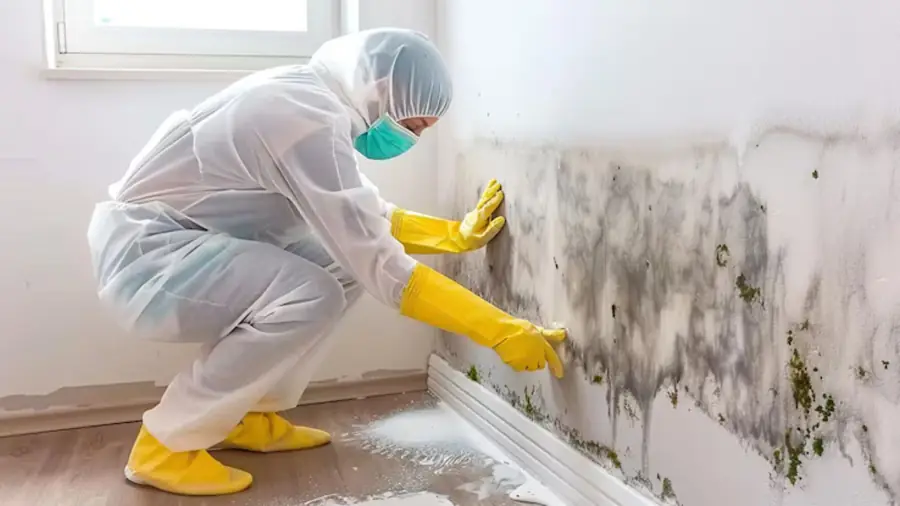
The EPA guide puts it simply: the key to mold control is moisture control. It advises drying water-damaged areas and items within 24 to 48 hours to prevent mold growth. After a burst pipe or a flood, that is the window that matters.
That is why water mitigation and mold work are linked. Fast drying with air movers and dehumidifiers often prevents the problem. If drying was delayed, or a leak ran unseen inside a wall, growth may already be present by the time you notice it.
The EPA also notes that small areas of about 10 square feet or less can often be handled by the homeowner, while larger areas or significant water damage need more extensive remediation. When in doubt, call and describe what you see.
Common leak sources behind mold
Mold calls often start with a leak someone did not notice for weeks. These are the sources that come up most.
- Toilet and sink supply lines: a slow drip inside a vanity or behind a toilet feeds the cabinet and wall.
- AC condensate line: a clogged drain line backs up and overflows near the air handler.
- Roof and siding: water gets behind shingles, flashing or siding and runs down inside the wall.
- Upstairs leaks: a bathroom or laundry leak can stain a finished basement ceiling below.
- Crawl space moisture: damp soil, poor venting and missing vapor barriers can keep framing and insulation wet.
Whatever the source, repair it first. Remediation on a wet building only buys time.
Leak found and mold showing?
Call to talk through the scope. Same-day response is offered when available, and the person answering can explain what happens first.
How containment and removal work
S520 is the published ANSI/IICRC standard for professional mold remediation. Ask any company whether its crews work to it.
- Assess and planMoisture meters and thermal imaging find the wet areas, and the crew sets the scope.
- ContainPoly sheeting seals the work area, and a negative air machine keeps air from leaking out.
- Filter the airHEPA air scrubbers run throughout the job to capture airborne particles.
- Remove porous materialsDrywall, insulation and pad with growth are cut out, bagged and carried out sealed.
- CleanFraming and solid surfaces are HEPA vacuumed and wiped. Then the area is dried.
- VerifyA visual check and moisture readings confirm the area is dry. Clearance testing is a separate step.
Mold testing and independent clearance testing
Testing and remediation are separate jobs. Testing finds out what is present, and remediation removes it. An independent assessor is a different party from the remediation company, hired to inspect and sample. After the work, clearance testing checks whether the area meets the plan's goals.
Using a separate assessor avoids having the same company grade its own work. Ask any company how clearance is handled, and ask the assessor what the report will say. Nothing here promises a pass or a particular result.
What decides the cost of mold remediation
A price depends on the job. Scope and price are explained before work starts.
| Factor | How it changes the job |
|---|---|
| Size of the affected area | A small area differs from a ceiling plus a wall plus framing. |
| Materials | Porous materials are removed, and removal and rebuild cost more than surface cleaning. |
| Access | Crawl spaces, attics and tight basements slow the work. |
| Containment and equipment | Negative air, HEPA scrubbers and poly sheeting run for days on larger jobs. |
| Moisture source | Fixing the leak is separate, and it comes first. |
| Testing and rebuild | Assessor fees and rebuilding drywall, insulation and paint are separate. |
Insurance covers mold only in some situations. Sudden and accidental water damage is often covered, gradual leaks often are not, so check your policy or ask your insurer. Want your real number? Call (508) 446-9244.
Licensing: ask before you hire
Requirements can depend on the job. Ask the company which Massachusetts requirements apply to your work, and ask whether it is licensed and insured. Rebuilding after removal may fall under water damage repair, and a leak that is still active may be emergency water removal first.
Mold work and nearby towns
Mold calls come from older homes across the area. Crews also serve Sturbridge, roughly 3 miles northwest of downtown Southbridge, where slow basement and drainage problems can keep framing damp.
Frequently asked questions
A musty smell often points to moisture, and mold is one possible cause. Only an assessment can tell. Find where the damp is coming from, and call to discuss it.
Not always. Visible growth with a known moisture source is often assessed on site. Testing is a separate service, and an independent assessor is a different party from the remediation company.
After remediation, an assessor who is not the remediation company inspects and may sample the area to see if it meets the plan. Results are the assessor's, and no outcome is promised.
Lenders and buyers sometimes ask for documentation before a purchase moves forward. What is required depends on the lender and the contract. Ask them, and ask your agent. No lender result is promised.
The EPA says areas of about 10 square feet or less can often be handled by the homeowner. Larger areas or significant water damage need more extensive remediation. Fix the moisture first.
Nobody can promise it will not. Mold needs moisture, so if the leak is fixed and the area stays dry, regrowth is much less likely. The EPA says it is impossible to remove all spores indoors.