
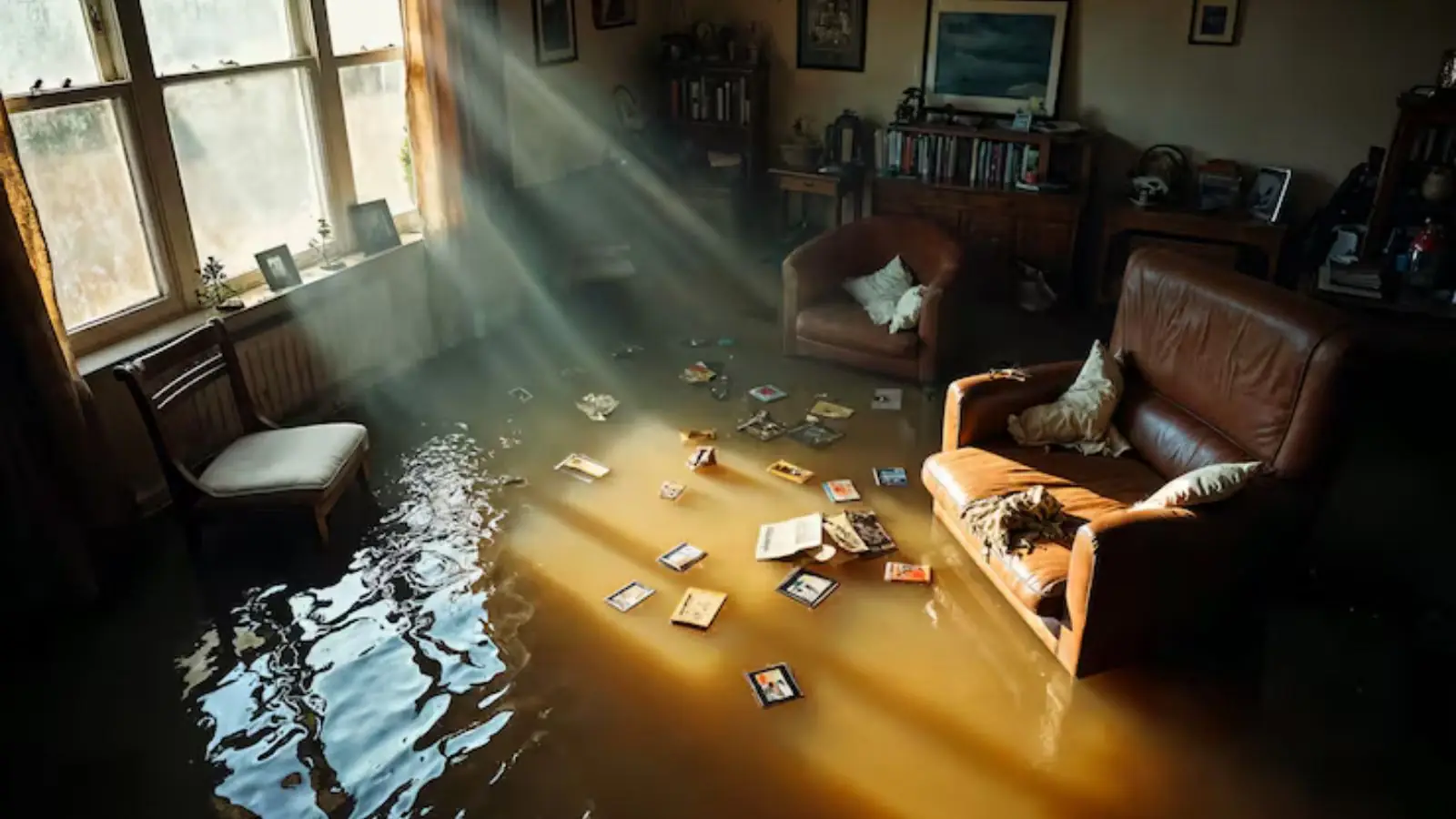
The carpet is soaked and the wall feels damp: what happens next
That is the moment mitigation exists for. Water has left the pipe or appliance, but it has not stopped moving: it wicks up drywall, soaks into pad and sits in the framing. Standing water goes first through emergency water removal, and then the structure itself is dried and monitored until the readings are normal.
Structural Drying
Structural drying is the controlled removal of moisture from framing, subfloors, walls and ceilings. It starts with a moisture map. Meters are pressed to the surfaces and a thermal imaging camera shows cooler, wetter areas behind paint and tile. The crew marks the wet boundaries, and that map sets how much equipment goes where.
Air movers then push dry air across the wet surfaces while LGR or desiccant dehumidifiers pull the moisture out of the air and drain or exhaust it. Warm, steady air speeds evaporation. Open windows do not substitute for this, since outdoor humidity in a New England summer can be higher than what the building holds.
Wall cavities and hardwood often cannot dry from the surface alone. Injectidry or panel drying pushes dry air into the cavity through small drilled holes or through a pulled baseboard, so the wall can stay in place instead of being demolished. Tight spaces under cabinets get the same treatment. The crew returns daily, moves the equipment, and records readings until the structure reaches its dry standard.
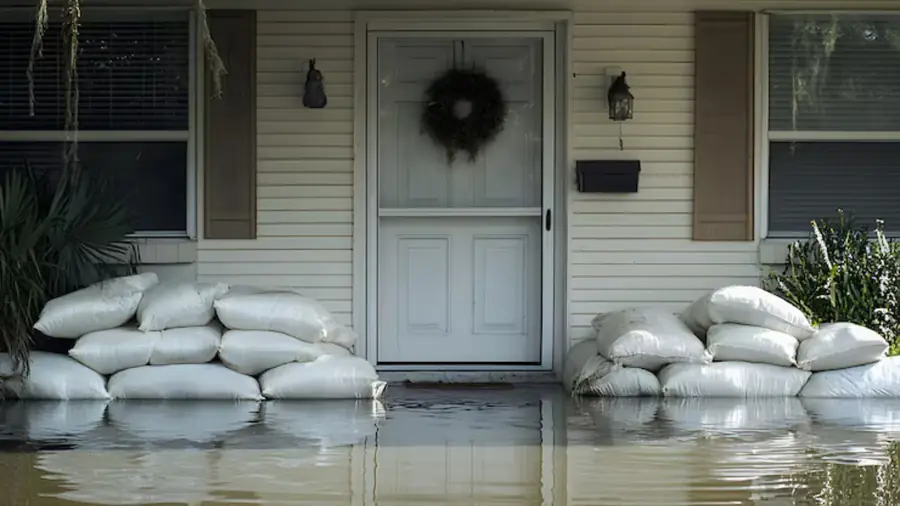
Drying equipment and what each piece does
Rental stores sell the same basic machines, so people often ask whether they can do the drying themselves. What matters is the plan, not the box.
- Air movers: High-velocity fans that sweep dry air across wet floors and wall bases. Placement and count follow the wet area, not the room size.
- LGR dehumidifiers: Low grain refrigerant units that pull moisture from the air in typical household conditions.
- Desiccant dehumidifiers: Used in cold spaces and very wet jobs where refrigerant units slow down.
- Moisture meters: Give numbers for drywall, wood and framing so drying is measured, not guessed.
- Thermal imaging cameras: Show where moisture hides without opening the wall.
- Injectidry and panel systems: Move dry air into wall cavities and under floors.
Renting the same machines without moisture mapping often leaves wet spots behind. We do not offer rentals. The equipment is part of a monitored job, with the crew placing it, checking it and removing it when readings are met.
What dries in place and what gets removed
The water category and the time spent wet decide most of these calls. The ANSI/IICRC S500 standard guides them, and you can ask any company whether its crews work to it.
| Material | Usually dried in place | Usually removed |
|---|---|---|
| Drywall | Clean water, caught within a day, firm to the touch | Soft, bulging or wet with Category 2 or 3 water |
| Plaster and lath | Localized wetting with sound keys | Loose plaster or sewage contact |
| Hardwood floors | Clean water, dried with floor-mat systems | Buckled or black-stained boards |
| Carpet | Clean water with the pad lifted and dried | Carpet with contaminated water |
| Carpet pad | Rarely saved | Almost always removed |
| Framing and subfloor | Nearly always dried in place | Only if rot or sewage soaked in |
| Insulation | Dense-pack that dries with cavity airflow | Fiberglass batts that sagged or took in dirty water |
When a crew wants something out, ask to see the meter reading beside it.
Floors wet, walls damp?
Drying works best in the first 24 to 48 hours. Call the 24/7 line, including nights and weekends. Same-day response is offered when available.
Drying goals and the 24 to 48 hour rule
The goal is dry standard: readings on drywall, wood and framing that match unaffected parts of the same building. The EPA's mold guide says to dry water-damaged areas and items within 24 to 48 hours to prevent mold growth, and that the key to mold control is moisture control. That is why mitigation is an emergency service and not something to schedule for next week.
Typical drying takes about three to five days for clean-water losses in ordinary materials. Plaster, thick hardwood, wet insulation and Category 3 jobs run longer. The crew should tell you the target readings, not just a number of days. If mold has already started, mold remediation follows the S520 standard and drying alone is not enough.
Monitoring days: what each visit covers
Drying is not set and forget. Each day has a purpose.
- Day 1: map and set upMeters and thermal imaging define the wet area. Wet pad and unsalvageable materials come out, and equipment goes in.
- Day 2: check and adjustReadings are logged. Air movers are repositioned, and wall cavities that are not drying get panel or injection systems.
- Day 3 and later: log progressMoisture content drops toward the dry standard. Humidity in the room is recorded.
- Final day: confirm and removeReadings match the dry standard, equipment comes out and a written record is left for your insurer. Rebuilding is covered under water damage repair.
Older Southbridge buildings dry differently
Southbridge grew around the American Optical Company, which closed in 1984 after employing more than 6,000 people, and around mills powered by the Quinebaug River. Mill-era buildings remain in town. The town's 2024 draft hazard mitigation plan reports that about 38.5 percent of occupied homes were built before 1939 and about 58.6 percent are multi-family.
In practical terms, thick masonry and old brick hold moisture, plaster dries more slowly than drywall, and one burst pipe on an upper floor can wet several apartments. Tell the person on the line how many floors and units are involved so the crew brings enough equipment. For a nearby example, see the Charlton service area.
What decides the price of mitigation
A fair price depends on seeing the damage. These are the factors, and scope and price are explained before work starts.
| Factor | How it changes the job |
|---|---|
| Water category | Category 3 adds removal and protective gear. |
| Affected area | Square footage and wall height of wetting set the equipment count. |
| Materials | Plaster and hardwood dry slowly and cost more days. |
| Drying days | Each added day means more equipment time and more readings. |
| Rebuild scope | Anything removed has to be replaced after drying. |
Want your real number? Call (508) 446-9244. Ask your insurer what your policy covers, since sudden and accidental damage is often covered and flood usually is not.
Electrical and sewage warning
If water touches outlets or the panel, stay out and call the utility or 911 before the restoration line. Cut power only if the panel is dry. Sewage water is Category 3, so keep people and pets out.
Mitigation questions
Probably yes. A wall that feels damp has water in the cavity, and fans alone will not reach it. A moisture meter will tell you in minutes.
Yes. The line is answered 24 hours a day, every day of the year. No arrival time is promised, and the person answering will explain what to do while help is arranged.
You can buy or rent the machines elsewhere. We do not rent them. They only work with a moisture map, correct placement and daily readings. Without them, hidden wet spots can stay behind.
Often three to five days for clean water in ordinary materials, longer for plaster, thick hardwood or sewage. The crew should give target readings.
Drying quickly removes what mold needs, but nothing makes it impossible to grow back. If water stays, mold can return. See water damage cleanup for removal of contaminated material.
No. Mitigation dries damage that already happened. Keeping groundwater out of a basement is a drainage contractor's job.