
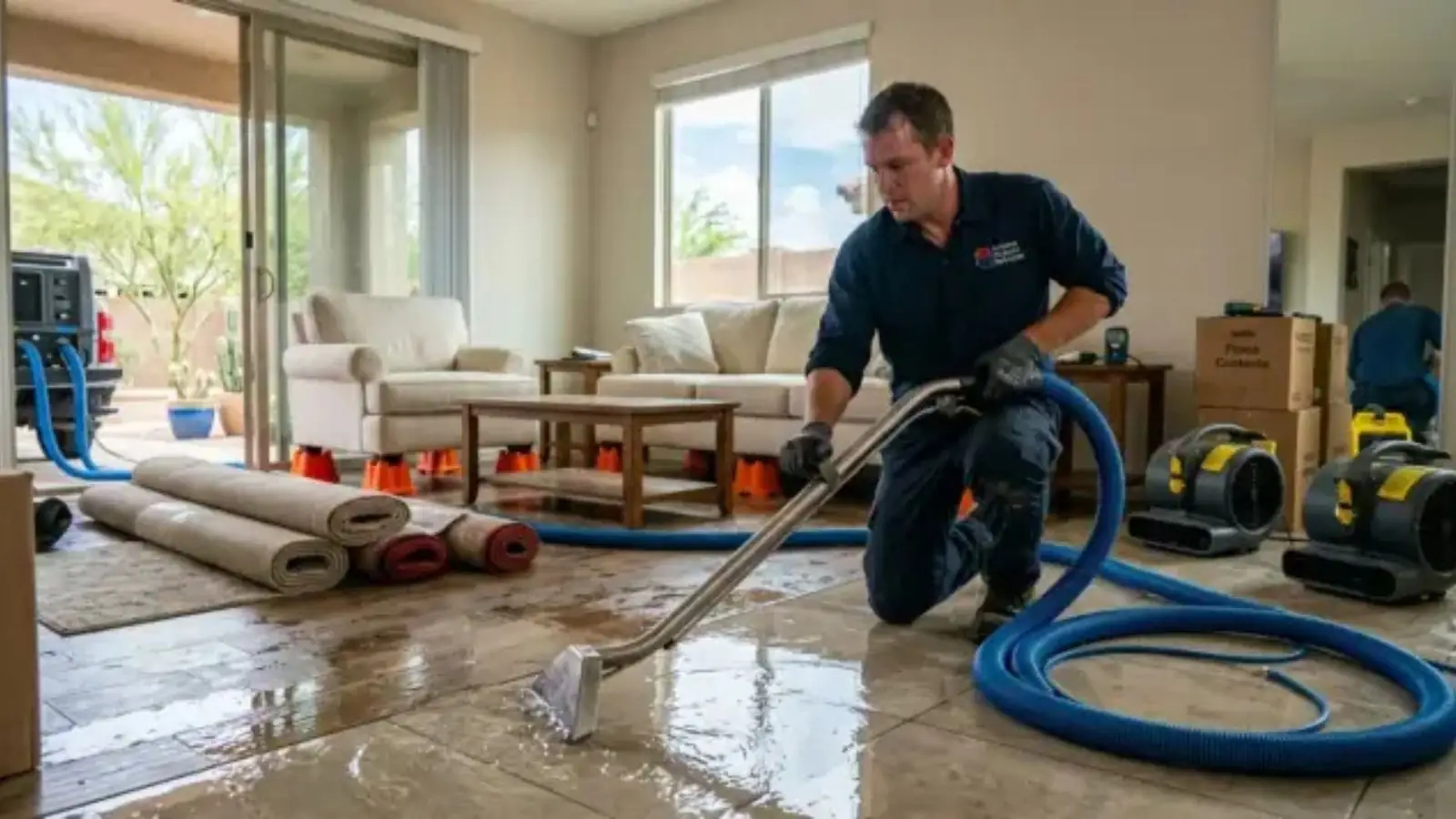
When standing water is an emergency
Treat it as an emergency if water is still coming in, if it is deeper than an inch across a room, if it has reached outlets or a furnace, or if a ceiling is bulging. The first hours decide how far the water travels into subfloors, wall cavities and the room below.
Clean water from a supply line can turn into Category 2 water within about 48 hours, and carpet pad, drywall and plaster start to fail well before that. If the water is from a sewer or a river, it is Category 3 from the start, and flood damage restoration rules apply.
Crews that follow ANSI/IICRC S500, the published standard for water damage restoration, classify the water first and decide what can be dried in place, so it is fair to ask any company whether it works to that standard.
Burst Pipe Water Damage
A burst pipe can release several gallons a minute, and a split in a half-inch line behind a wall can run unseen for hours. The first move is the main shutoff, usually where the line enters near the meter or in the basement. Turn it clockwise until it stops, then open a low faucet to drain what is left. Do not touch the panel if you are standing in water.
Once the water is off, the work is extraction first, then drying. Pumps and extractors remove the free water. Moisture meters and thermal imaging cameras then find water that moved into insulation, subfloors and the wall cavity below the break. Drywall below the water line is often cut out so the cavity can air out.
Most burst pipes happen in cold snaps, in exterior walls, unheated crawl spaces and attics. Left alone, even a small spray can drive water down two floors in a multi-family building. Once the standing water is out, water mitigation handles the drying that follows.
The cause matters to your insurer. Photograph the pipe, the water and every wet item before anything is moved, and ask your insurer whether the loss is sudden and accidental under your policy.
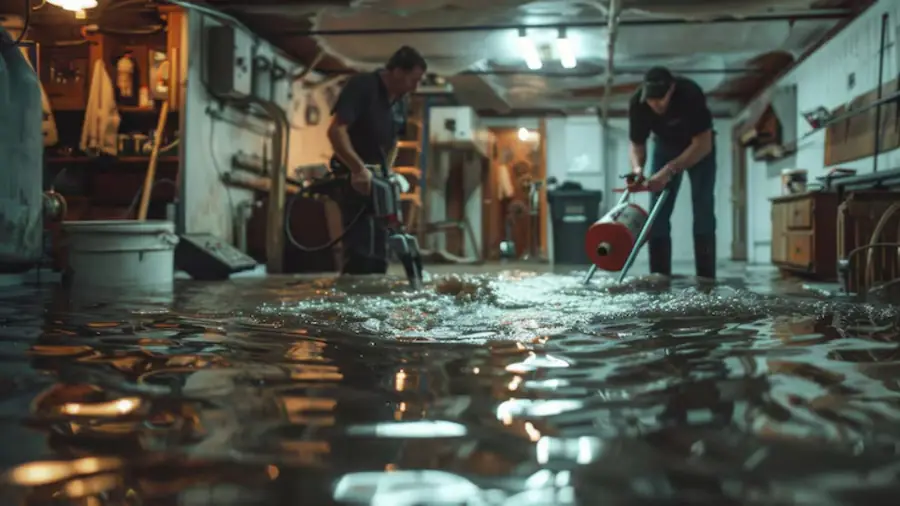
Electrical and sewage safety come first
Water and electricity can kill. Stay out of any room where water touches outlets, cords or appliances. Cut power at the panel only if the panel is dry and you can reach it without stepping in water. If you cannot, or you smell gas, hear buzzing or see sparks, call the utility or 911 before you call the restoration line.
Sewage is a different hazard. Water from a toilet, floor drain or sewer line is Category 3 and contains bacteria. Stay out, keep children and pets away, and do not run fans through it. Professionals work in protective gear with containment.
Extraction equipment and what each piece does
The equipment sent depends on the depth, the surface and the water category.
- Truck-mounted extractors: Powerful vacuums on a service vehicle pull large volumes through a hose run to the wet room, useful for flooded floors and wall-to-wall carpet.
- Portable extractors: Smaller units carried into basements, apartments and second floors where a truck hose cannot reach.
- Submersible pumps: Set into standing water in basements and crawl spaces to move several inches or feet of water out through a discharge hose.
- Wet vacs: Pick up the last film of water in corners, stairs and around furniture legs.
- Moisture meters: Confirm water is gone from carpet, wood and drywall instead of guessing by touch.
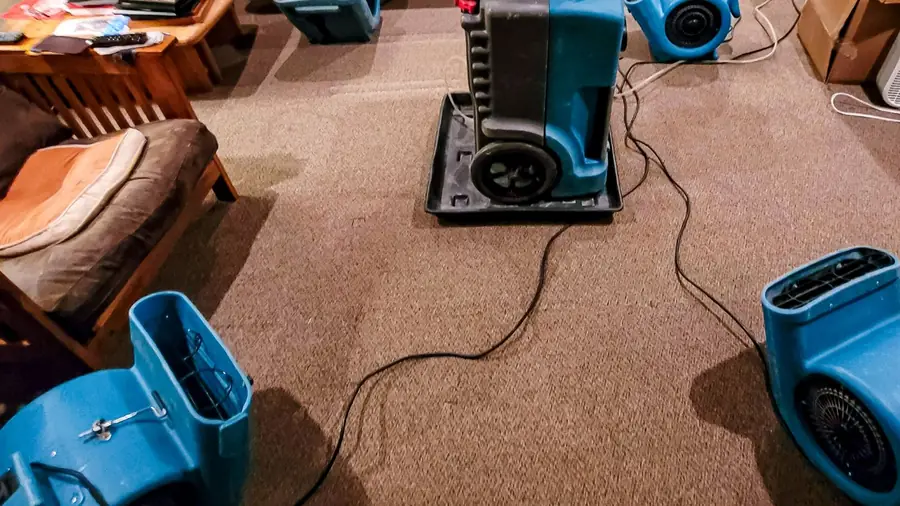
Removal is only the first stage. Surfaces that look dry still hold moisture, which is why drying equipment follows within the same visit.
Water still coming in?
Call the 24/7 line now. Night and weekend calls are answered the same way, and same-day response is offered when available.
What to do while you wait for help
These steps are safe for most homeowners. Skip any that put you near live electricity or contaminated water.
- Stop the sourceClose the fixture valve, or the main shutoff if you cannot find the leak.
- Check the panel before powerTurn off breakers for wet areas only if the panel is dry. Otherwise call the utility.
- Lift what you canMove rugs, electronics, books and papers to dry ground or on top of furniture.
- Photograph everythingTake pictures of the water, the source and damaged items before cleanup begins.
- Keep everyone out of dirty waterChildren, pets and anyone with open cuts should stay away from sewage or storm water.
- Call the 24/7 lineDescribe depth, source and rooms affected. Same-day response is offered when available.
Common emergency scenarios
Three calls come in again and again, and each has its own first move.
Crawl space with water
Do not enter if wiring runs low or the water is deep. A submersible pump clears it, and a vapor barrier and insulation need checking afterward. If groundwater keeps coming in, restoration will not stop it. That needs a drainage contractor.
Water heater failure
Turn off the power or gas to the unit, shut the cold supply valve above it and drain a hose to a floor drain. A leaking tank in a finished basement can saturate carpet and drywall in under an hour.
Washer supply valve or hose
Shut the wall valves, which are often behind the machine. Rubber hoses fail at the fittings. Washer water is typically Category 2 and can run through the floor to the room below.
Southbridge water and frozen-pipe season
The Southbridge Water Department serves most of town. If the break is on the service line between the street and your meter, call the department and ask about the main shutoff, since the curb valve may not be yours to turn. Homes on private wells shut the pump at the breaker instead.
Central Massachusetts winters are hard on plumbing. The Worcester area averages about 78 inches of snow a year, and old multi-family buildings in Southbridge often have supply lines in cold exterior walls. Open cabinet doors under sinks and let a faucet drip when a deep freeze is forecast. If a pipe froze but has not yet split, call right away, because thawing can reveal the split. For the next town east, see the Dudley service area.
What decides the price of emergency water removal
Nobody can quote an honest number without seeing the water. These factors move the cost.
| Factor | How it changes the job |
|---|---|
| Water category | Category 3 water adds containment, protective gear and disposal. |
| Depth and area | Several inches across a basement need more pumps and more hours than a wet kitchen floor. |
| Materials affected | Carpet, pad, hardwood and drywall each dry or fail on their own timeline. |
| Drying days and equipment | Extraction is quick. Air movers and dehumidifiers running for several days add the larger share. |
| Rebuild scope | Removed materials are replaced later, and that is priced separately. |
Want your real number? Call (508) 446-9244 and describe what you see. Scope and price are explained before work starts. After a loss, ask your insurer what your policy covers.
Emergency water removal questions
Yes. The line is answered 24 hours a day, every day of the year. No arrival time is promised, but the person answering will explain what to shut off and what to expect.
As fast as possible. The EPA advises drying water-damaged areas within 24 to 48 hours to prevent mold growth, so the clock is real. Call even if the source is already stopped.
For a small spill of clean water, yes. For anything deeper, Category 2 or 3, or water that has reached walls, a household wet vac cannot pull moisture out of the structure.
Call the Southbridge Water Department about the service line and main shutoff. Call the restoration line for the water already inside the building.
No. It is Category 3 and needs containment, protective equipment and sanitizing. See water damage cleanup for what follows removal.
Sudden and accidental damage, like a burst pipe, is often covered. Gradual leaks often are not, and flood damage is usually excluded without separate flood coverage. Check your policy and ask your insurer.