
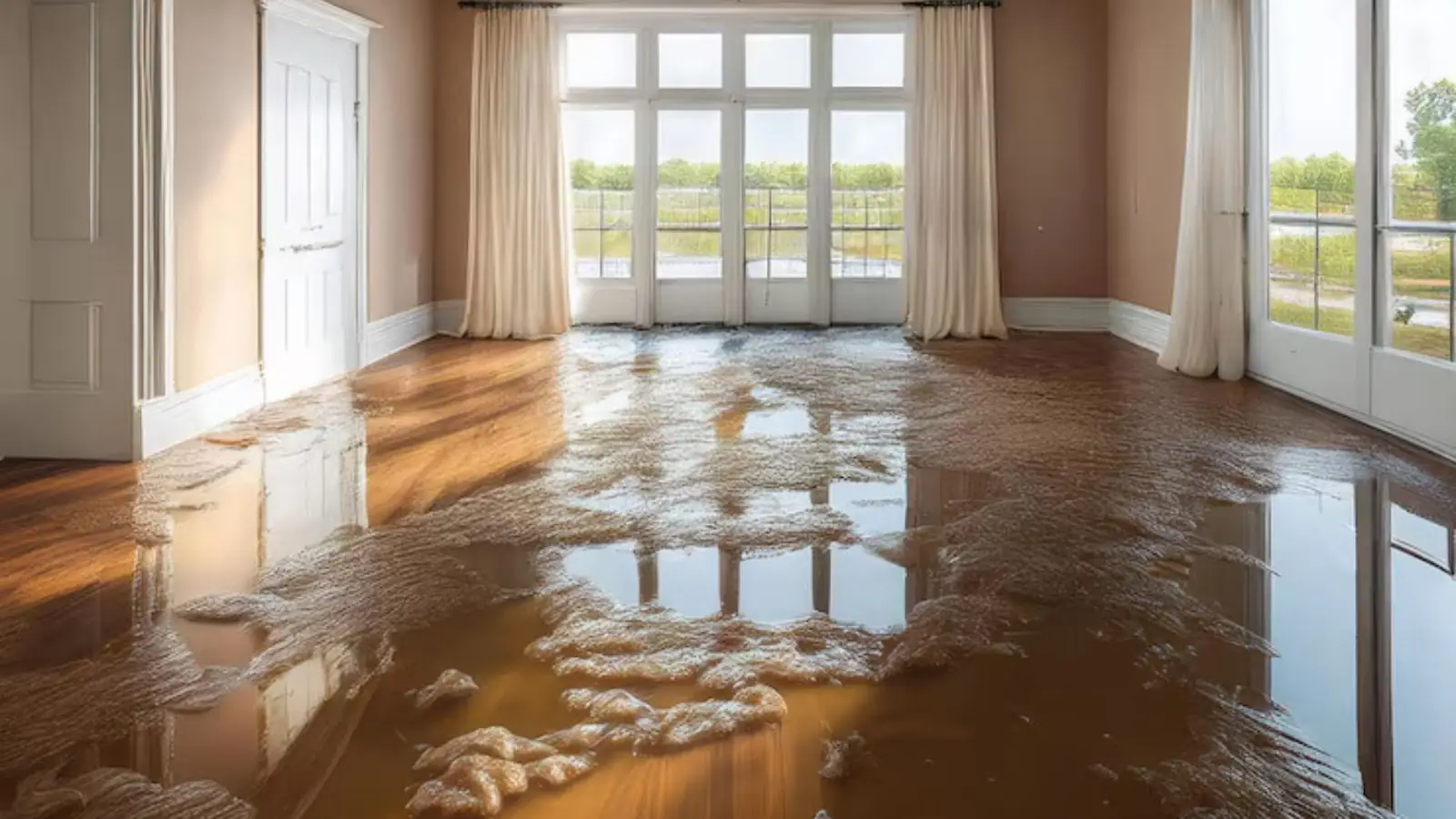
Where repair fits after the water is gone
Repair comes last. If the carpet was soaked for two days, water mitigation comes before any rebuild, and the wet debris has to leave the building through water damage cleanup. Painting over a damp wall only hides the problem for a few weeks.
A good repair crew checks moisture readings before closing anything up. If the numbers are still high, the job goes back to drying. If mold is already growing on the back of a panel, mold remediation has to happen before new drywall goes on.
Homeowners nearby can see how this plays out on the Sturbridge service page.
Ask any company whether its crews work to ANSI/IICRC S500, the published standard for water damage restoration, because rebuilding over materials that were never dried to that standard is how stains and mold return.
Ceiling and Wall Water Damage Repair
A brown ring on a ceiling tells you water came through, but not how much is still up there. The first step is a moisture meter and a thermal imaging camera, which show wet insulation and framing that the paint hides. A bulging or sagging ceiling holds water and should be opened carefully. Stand clear and poke a small hole to let it drain into a bucket before it lets go on its own.
Small stains on dry, sound drywall can often be sealed with a stain-blocking primer and repainted. A sagging section, a soft spot or a stain that returns after painting means the board is done. The damaged piece is cut out past the wet edge, wet insulation is removed, and the framing is checked for rot.
New drywall is hung, taped, mudded in thin coats, sanded, primed and painted. Water wicks upward in a wall, so crews often cut two feet or more above the visible line and then confirm with the meter. Swollen cabinets and trim are replaced or refinished in the same scope.
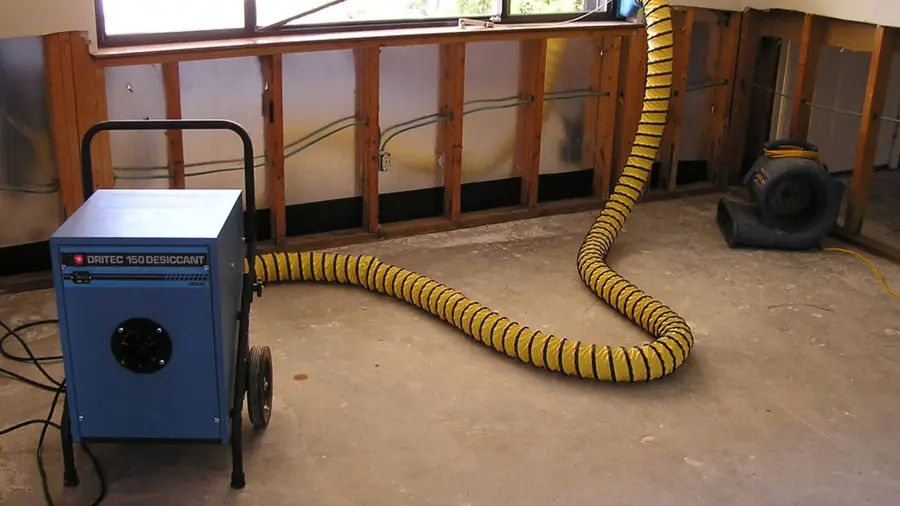
Safety checklist before repair work starts
Repair is the quiet stage, but it still has hazards. Run through this list before anyone cuts, sands or demolishes.
- Power: keep circuits off in any room where drywall or ceiling is open until an electrician has cleared it.
- Dust: wear at least a fitted dust mask or respirator when cutting or sanding old plaster, paint or insulation.
- Old materials: have pre-1978 paint, plaster and flooring tested for lead and asbestos before they are disturbed.
- Moisture: confirm with a moisture meter that the wall or floor is dry before it is closed up.
- People and pets: keep children and pets out of the work area until dust is cleaned up.
Hardwood floor cupping and drying
Cupping happens when board edges take on moisture faster than the face, so the board curls up at the sides. It is common after a dishwasher leak, a condensate line backing up or a damp slab.
Do not sand a cupped floor while it is wet. Boards dry slowly, sometimes over several weeks with controlled dehumidification, and many flatten by themselves. Sanding comes after readings match a dry reference board. Boards that stay crowned, buckled or loose are replaced.
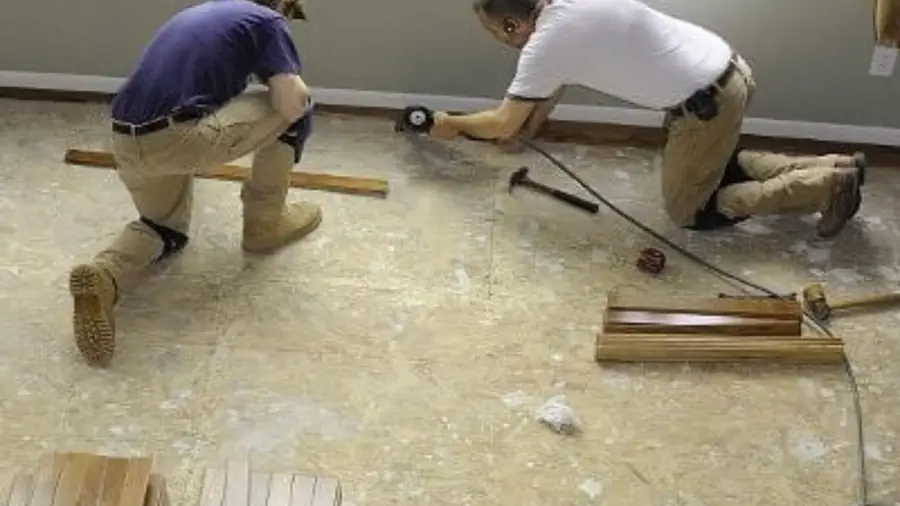
Repair or replace: how the decision usually goes
Not everything wet has to be torn out. The material, the water category and how long it stayed wet decide the answer.
| Material | Often repairable | Usually replaced |
|---|---|---|
| Drywall | Small stain, board still firm and dry | Sagging, soft, crumbling or wet more than 48 hours |
| Plaster and lath | Hairline cracks, localized stains, keys intact | Plaster pulled loose from the lath or wet from sewage |
| Solid hardwood | Mild cupping that flattens as it dries | Buckled, black-stained or loose boards |
| Carpet and pad | Clean water, dried fast | Category 2 or 3 water, or pad left wet for days |
| Cabinets and trim | Solid wood that dried flat | Particleboard that swelled, which does not shrink back |
Ask the professional to show the moisture reading beside every item they want to remove. That keeps the scope honest on both sides.
Stain on the ceiling, soft spot in the wall?
Call the line and describe what you see. If it is still wet, the advice may be to dry it first, and same-day response is offered when available.
What gets rebuilt, and in what order
Order matters because every layer sits on the one before it. A typical rebuild after drying runs like this:
- Confirm dry readingsMoisture meters on framing and subfloor match a dry reference before anything is covered.
- Replace insulation and repair framingWet batts out, new insulation in, soft studs or joists sistered or replaced.
- Hang drywall or patch plasterNew board is fastened, then taped and mudded in coats. Plaster patches get a base coat and a finish coat.
- Prime, then paintStain-blocking primer first on ceilings and walls, then two coats of finish paint.
- Install flooringSubfloor repairs first, then underlayment and flooring, with expansion gaps left at walls.
- Set cabinets, trim and fixturesBaseboard, casing, cabinet toe-kicks and outlet covers go back last so they are not damaged during sanding and painting.
Pre-1939 plaster versus modern drywall
The town's 2024 draft hazard mitigation plan reports that about 38.5 percent of occupied Southbridge homes were built before 1939, and about 81.6 percent in 1979 or earlier. Those are older Census estimates, so treat them as a guide. In practice, many Southbridge ceilings are plaster on wood lath, not drywall.
Plaster is heavy, so a wet ceiling can let go in slabs. It hangs on plaster keys pushed between the lath strips, and once the keys break, the ceiling must be re-secured with screws and washers or taken down. Patches are skim-coated and blended, which takes more steps than a drywall patch. Drywall from later decades cuts out more simply but crumbles faster once soaked.
On pre-1978 homes, ask the crew about lead paint and asbestos-containing materials before any demolition.
What decides the price of water damage repair
Nobody can quote a fair number without seeing the room. These are the factors that move a repair price, and the professional on site should explain each one before work starts.
| Factor | How it changes the job |
|---|---|
| Water category | Category 3 water means more removal and sanitizing, so more material has to be rebuilt. |
| Affected area | One patched ceiling is a different scope than three rooms of wall and floor. |
| Materials | Plaster, hardwood and custom trim cost more and take longer than drywall and laminate. |
| Drying days and equipment | Surfaces that dried slowly may need more removal, and rebuild cannot start until readings are normal. |
| Rebuild scope | Matching old trim, texture and paint across a whole room adds steps beyond the damaged area. |
Want your real number? Call (508) 446-9244 and describe the damage, and the professional will explain how scope and price are set.
Insurance note
Sudden and accidental water damage, such as a burst pipe, is often covered by a homeowners policy, while gradual leaks and neglect often are not. Flood damage is usually excluded and needs separate flood coverage. Check your policy or ask your insurer. No company can promise approval or payout.
HIC registration for rebuild work
In Massachusetts, a contractor doing repair on an existing owner-occupied home of one to four units generally needs Home Improvement Contractor registration through the state's Office of Consumer Affairs and Business Regulation. Some small jobs are exempt. An unregistered contractor cannot be covered by the state Guaranty Fund, which can otherwise pay up to $25,000 of actual losses. Structural work may also need a Construction Supervisor License.
Ask any company for its registration and check it with the state before signing. Ask which Massachusetts requirements apply to your job, and ask the Southbridge building department whether a permit is needed.
Restoration is not waterproofing
Repair puts back what water already damaged. It does not stop groundwater, a failing gutter or poor grading from sending more water into a basement. Those are drainage and foundation jobs. Fix the source first, or the new drywall will get wet too.
Frequently asked questions
Repairs start once the structure reaches normal moisture readings, which often takes several days. Starting earlier traps water behind new materials. The professional should show you the readings before closing anything up.
Only if it is dry, firm and the leak is fixed. A stain-blocking primer helps, but a stain that bleeds back through or a ceiling that feels soft means the board or plaster has to be cut out. Painting a wet ceiling can hide a mold problem.
Mild cupping often does as the boards dry, but it can take weeks. Wait for dry readings before sanding. If boards are buckled or black, they are replaced.
Usually yes, because the plaster keys that hold it to the lath may have broken. Patches take several coats and more skill to blend. Many Southbridge homes have plaster, so ask whether the crew works with it.
For repair on an owner-occupied home of one to four units, Home Improvement Contractor registration is generally required, with some exemptions. Ask for the number and verify it with the state. We cannot speak to any other company's status.