
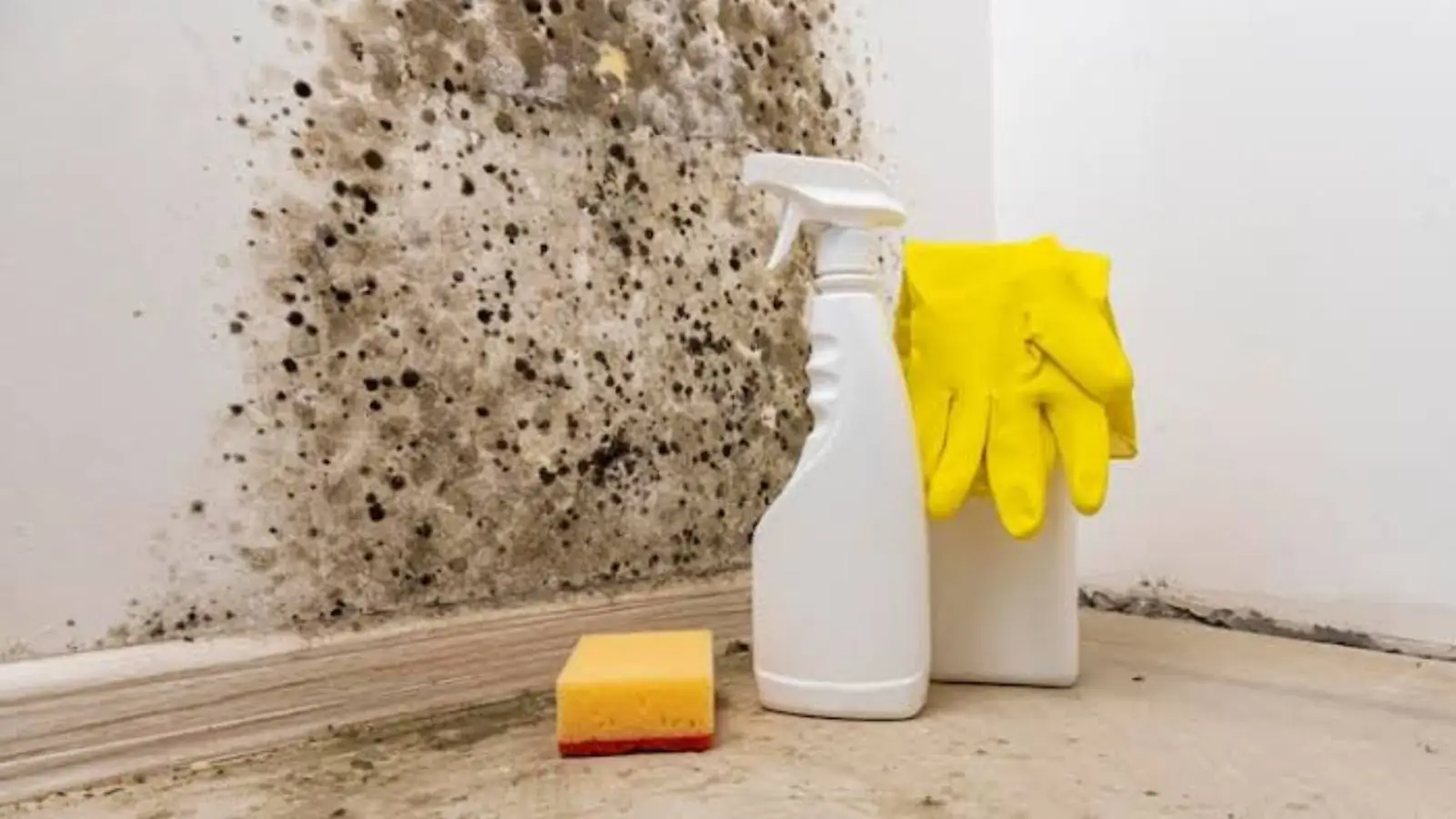
Killing versus removing: why the difference matters
You do not need to kill mold in a basement so much as remove it and dry the space. Dead mold can still sit on a surface, and dead or alive, it is the same physical material. Cleaning takes it off hard surfaces. Drying and humidity control keep it from growing back.
The EPA's mold guide says it plainly: the key to mold control is moisture control. It also says it is impossible to get rid of all mold and mold spores indoors, so the target is a dry basement with no visible growth, not a sterile one.
Safety checklist before you scrub
Cleaning mold stirs up spores, so set up before you start.
- Never mix cleaners: bleach and ammonia produce toxic gas, and bleach with acids does the same.
- Protect yourself: wear gloves, eye protection and a fitted respirator rated for fine particles.
- Ventilate: open a window or run a fan that blows outdoors, and keep the work area closed off from the rest of the house.
- Stop if it is large: the EPA guide treats about 10 square feet as the line between a homeowner job and a larger one.
- Fix the water first: cleaning without drying the source only buys a few weeks.
What each common method actually does
Homeowners reach for whatever is under the sink. Here is how the usual options compare on basement surfaces.
| Method | What it does | Where it falls short |
|---|---|---|
| Household bleach | Disinfects hard, non-porous surfaces such as sealed tile or glazed ceramic | Does not reach roots in wood or drywall, and leaves water behind that can feed regrowth |
| White vinegar | Mild acid that can reduce growth on some surfaces | Weak on porous materials, and the smell lingers in a closed basement |
| Detergent and water scrub | Lifts mold off hard surfaces so it can be wiped away | Needs the surface rinsed and dried fast, or the water becomes the next problem |
| Dehumidifier plus airflow | Removes the moisture mold needs to grow | Does not remove existing growth, so cleaning or removal still comes first |
| Cutting out and discarding | Takes porous, mold-affected material out of the house | Needs containment so spores are not spread through the home during work |
Never mix bleach with ammonia or other cleaners, because the fumes can be dangerous. Wear gloves, eye protection and a respirator rated for the job, and ventilate.
Mold spreading after a basement leak?
Call the 24/7 line. Same-day response is offered when available, and scope and price are explained before work starts.
A sensible order of work in a basement
This order works for a small area that a homeowner can handle. The EPA says about 10 square feet or less can often be handled by the homeowner, while larger areas need more extensive remediation.
- Find and stop the waterA cracked foundation wall, a failed sump pump, a dryer vent that dumps indoors or a leaking pipe will bring the mold back. Cleaning before fixing the source wastes the effort.
- Separate porous from non-porousConcrete, sealed tile, metal and glass can be cleaned. Carpet, drywall, ceiling tile, insulation and cardboard that carry growth are usually removed and bagged, not scrubbed.
- Clean the hard surfacesScrub with detergent and water, wipe, then dry with fans. A damp wipe-down with disinfectant afterward is optional and only helps on non-porous surfaces.
- Dry everything fastRun a dehumidifier and air movers. The EPA advises drying water-damaged areas and items within 24 to 48 hours to prevent mold growth.
- Control humidity afterwardKeep basement humidity under about 50 percent with a dehumidifier and a hygrometer. A reading that creeps up in summer is an early warning.
Porous versus non-porous: the line that decides everything
Mold sends thread-like roots called hyphae into porous materials, so wiping the visible patch on drywall paper or a wood stud leaves much of the growth behind. Bleach is mostly water, and on porous surfaces the water soaks in while the chemical stays near the surface.
Solid framing lumber is the usual exception that gets treated in place: it is cleaned, sometimes sanded or media blasted, and dried until the readings are normal. Soft materials are cut out. When a basement has both, mold remediation crews set up containment with plastic sheeting and negative air before any removal, and follow the ANSI/IICRC S520 standard.
When to stop and call
Call if the growth covers more than about 10 square feet, if it came back after cleaning, or if the basement flooded. Floodwater is classed as Category 2 or 3 under ANSI/IICRC S500, and porous materials touched by it generally come out. A flood damage restoration crew can handle the drying and the mold work in one visit.
Questions about health symptoms belong with a physician, not a cleaning guide.
What Southbridge's flood history means for basements
The town's 2024 draft hazard mitigation plan describes a 1950s flood that put water across Main Street past West and Mill Streets. In 1955 the French River dams failed upstream, including a breach in Charlton, and Southbridge felt it even though no Southbridge dam failed. In 2005 a flood damaged a local business.
For a homeowner, that history is a reason to treat a damp basement as a recurring issue, not a one-time cleanup. If your house sits near the river or downtown, check the FEMA flood map for your address and keep a hygrometer and dehumidifier ready instead of waiting for a stain.
Neighboring towns share the same rivers. If you live in Dudley or Webster, the French River runs along the town line, so the same advice applies: dry fast, and check the flood map.
Frequently asked questions
On sealed, non-porous surfaces it can disinfect. On unfinished concrete block, wood and drywall it mostly treats the surface, and the water it carries can help the mold return. Removal and drying matter more than the chemical.
Neither solves the moisture problem. Vinegar is milder and can reduce surface growth, but it is weak on porous materials and leaves an odor. Detergent scrubbing followed by quick drying is a reliable option on hard surfaces.
Aim to hold indoor humidity below about 50 percent. A cheap hygrometer tells you the real number, and a dehumidifier sized for the space does the rest. Readings that stay high after a rainy week point to a moisture source worth tracing.
No. Paint over active growth traps moisture and the mold keeps feeding underneath. Clean or remove it, dry the surface, and only then consider a mold-resistant primer.
Testing can show what species are present or confirm clearance after work, but it does not replace finding the moisture. If you plan to test, ask the company whether testing follows S520 and whether it is independent of the removal work.
Rarely. A fan moves air but does not remove the moisture, and wet drywall, insulation and carpet pad hold water for days. After a flood, porous materials usually come out and the structure is dried with air movers and dehumidifiers.