
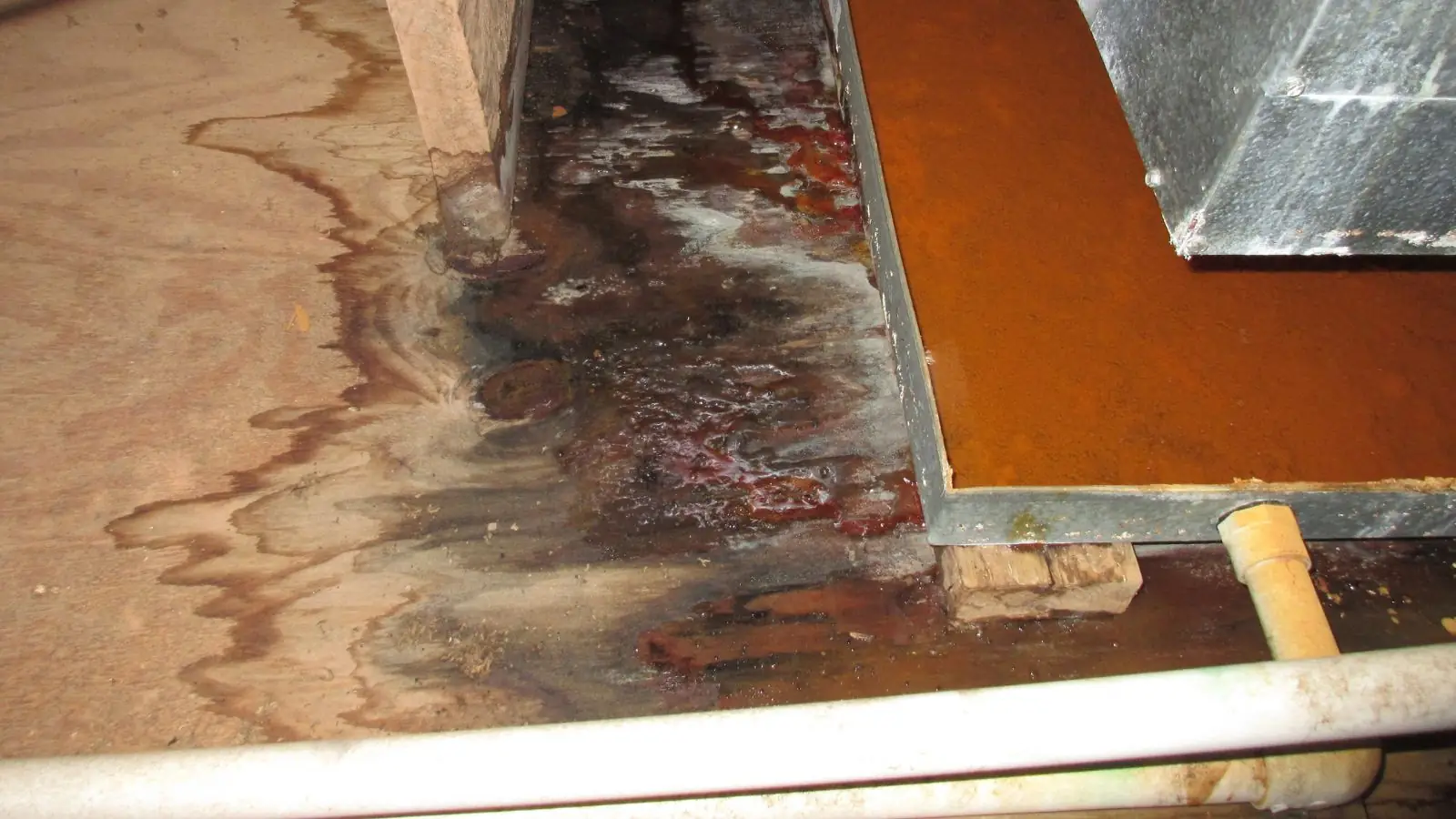
Why laminate fails so quickly
Laminate planks have a top wear layer, a printed image layer and a core of high-density fiberboard. The core is made of compressed wood fibers and resin, and it soaks up water at the plank edges and seams. The edges swell first, then the plank lifts at the seams, a pattern called peaking.
A spill wiped up in minutes is usually fine. Water that sat for hours or got under the planks is a different problem, and the swelling is permanent in most cases because the fibers do not shrink back to their original size.
Professional drying follows ANSI/IICRC S500, the published standard for water damage restoration, which is why a moisture reading, not the look of the surface, decides whether a floor is dry.
Save it or pull it: a decision table
The right call depends on how long the floor was wet and where the water went. This table gives the usual outcome.
| What happened | Condition of planks | Usual outcome |
|---|---|---|
| Surface spill, wiped within an hour | No swelling at seams | Dry the surface and watch the seams over a few days |
| Water on top for several hours | Slight edge swelling, no peaking | Possible to dry in place if caught early, but results vary |
| Water got under planks, underlayment wet | Edges raised, planks cupped | Planks usually removed, subfloor dried, floor replaced |
| Leak ran for days or from upstairs | Peaking, buckling, staining at joints | Remove planks and underlayment, dry the subfloor, then rebuild |
| Contaminated water, such as a washer drain or sewage | Any visible effect | Remove and discard porous materials, sanitize first |
Click-lock laminate can sometimes be taken apart and re-laid if the planks were pulled quickly and are undamaged. Glued-down laminate almost never can.
How the floor is dried
Saving the planks is secondary to saving the subfloor. Wet underlayment and plywood left covered grow mold and can warp.
- Stop the water and map itA moisture meter and thermal imaging camera show how far the water spread, including under cabinets and into the baseboards.
- Lift the planksPlanks nearest the wet area are released or cut and removed. This exposes the underlayment and subfloor so both can dry.
- Pull the underlaymentFoam and felt underlayment trap moisture against the subfloor. If it was soaked, it is discarded.
- Dry with air movers and a dehumidifierAir movers blow across the subfloor while LGR dehumidifiers remove the moisture from the room air. Some jobs use mats and a drying system under the floor.
- Confirm readings, then rebuildThe subfloor should read near normal before any new flooring goes down. Water damage repair covers the flooring stage.
Planks peaking after a leak?
Call the 24/7 line. Same-day response is offered when available, and scope and price are explained before work starts.
Signs the planks are past saving
Check these before you decide to wait and see.
- Raised edges you can catch with a fingernail: The core has swollen and will not shrink back.
- Planks that peak or tent at the seams: The floor is pushing against itself, which usually means water under a large area.
- Musty smell when you lift a corner: Trapped moisture is feeding growth under the floor.
- Soft or dark subfloor under the planks: Plywood or OSB is wet and may need replacing.
- A floor that stays wet beyond 48 hours: Mold risk rises, and the EPA advises drying within 24 to 48 hours.
If a stain appears at a baseboard or under a wall, water has traveled, and water mitigation should look at the wall cavity as well.
When the leak started in the unit above
In a multi-unit building the water may arrive through the ceiling and run across the floor of your unit, so the damage is on two levels. Photograph it, tell the landlord or property manager in writing, and shut off any valve you control. Ask who will pay for drying before you wait for an answer, because delay makes the loss bigger for everyone.
Your policy may or may not apply to damage that came from another unit. Check your policy and ask your insurer.
What to do before anyone arrives
Shut off the water to the fixture or the main valve, and unplug anything on or near the wet floor. Lift rugs, boxes and furniture legs off the planks, and put foil or plastic tabs under furniture you cannot move. Wipe standing water with towels and run a fan across the surface, but do not seal the floor with a wax or sealant.
Take photos of the floor, the source and any stains on the ceiling below or the wall beside it. Keep a list of damaged items. If the water was dark, smelly or came from a drain, keep everyone off the floor and wash hands after contact.
Why a dry-looking floor can still be wet
Laminate is a floating floor sitting on foam. Water that gets under it spreads sideways along the subfloor and wicks into the base of walls and cabinet kickplates. The surface can look fine while the underlayment is soaked, and that moisture feeds mold within a few days.
A thermal imaging camera and moisture meter find that hidden water in minutes. If you only fan the surface, the readings below stay high, and the floor starts to cup weeks later.
What Southbridge's multi-family housing means for floors
The town's 2024 draft hazard mitigation plan reports multi-family homes at about 58.6 percent of occupied units, against about 41.3 percent single-family. The plan uses older Census figures, so treat it as a guide.
That mix is why laminate leaks here so often involve an upstairs unit. In a two or three-family house, a failed washer valve on the second floor can soak the kitchen floor below, and the lower tenant may not know until the planks peak. Everyone in the building should know where the shutoffs are, and a fast call limits the number of units involved.
The same pattern holds in Webster and Oxford, which the Southbridge line also serves.
Frequently asked questions
Almost never. The fiberboard core expands when wet and stays expanded. Light edge swelling from a quick spill may settle a little, but planks that have peaked are normally replaced.
If it was soaked, yes. Foam and felt trap water against the subfloor and slow drying. Removing it lets air reach the plywood so it can be dried properly.
It depends on the amount of water and the subfloor material, but drying commonly takes several days with air movers and dehumidifiers. The crew should show you moisture readings that tell them when it is done.
Waterproof vinyl plank tolerates spills better, but no floor protects the subfloor if water gets underneath. The choice is a flooring question, not a restoration one.
Sudden and accidental damage is often covered, while gradual leaks often are not. Check your policy, ask your insurer, and document the floor before removal. Nobody can promise approval.
You can. Tell the landlord in writing and call the line yourself so drying starts. Water spreads between units quickly in older multi-family buildings, so describe how many floors are wet.