
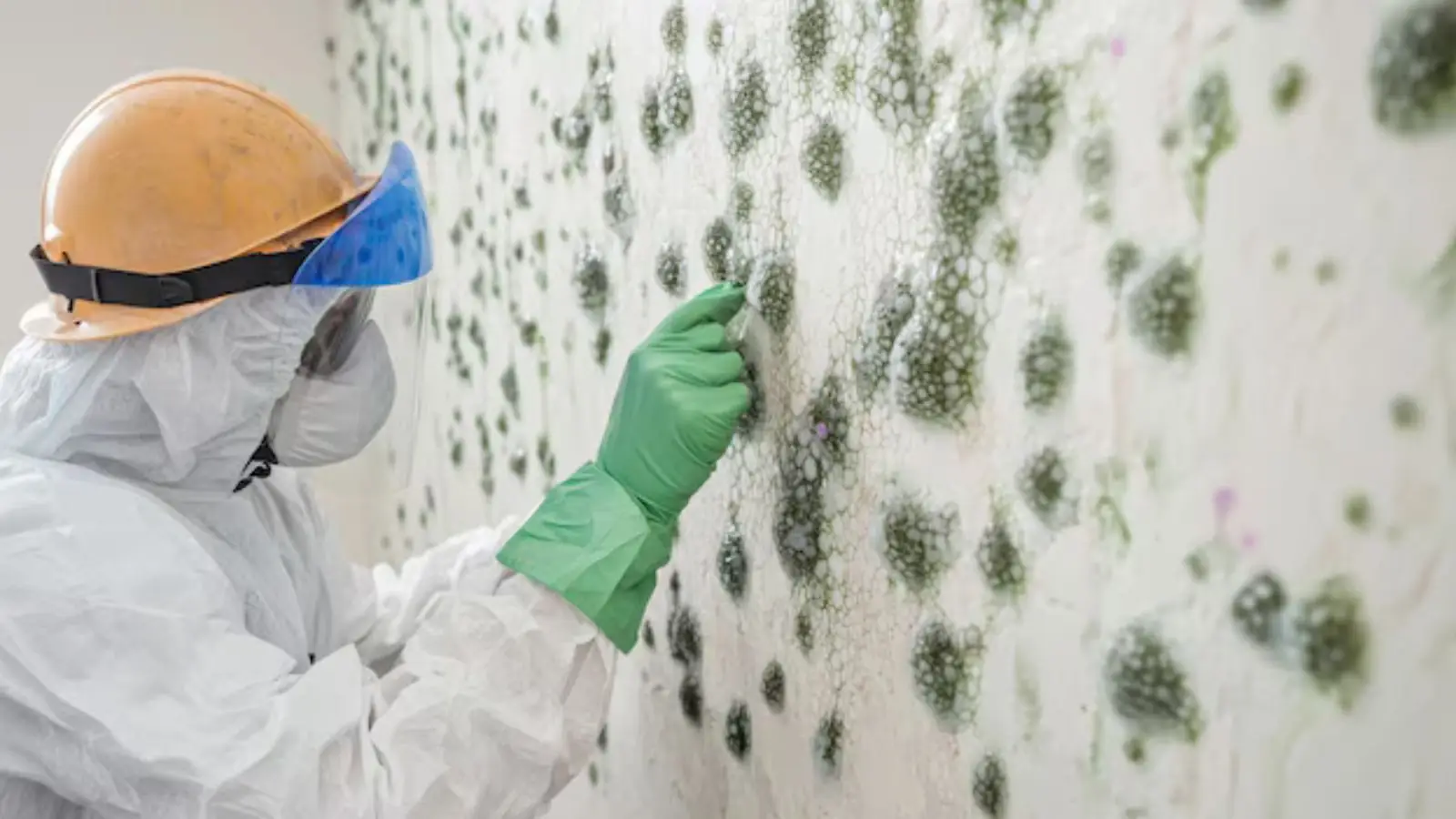
Trace the water before you touch the mold
Mold on a wall is a symptom. The wall stayed wet long enough for growth to start, and something is feeding it: a leak behind the surface, condensation on a cold exterior wall, water wicking up from a damp basement floor or a roof and gutter problem running down the inside face.
Press on the wall with your palm and check whether it feels cool or damp. Look above and below the patch, because the stain is rarely at the source. A moisture meter or thermal imaging camera, which a restoration professional carries, finds wet areas that your hand cannot. Fix the water first. Then deal with the mold.
Common sources include a weeping supply line inside the wall, a failed window seal, a clogged gutter that sends water down the siding and a bathroom fan that vents into the attic instead of outdoors.
What to do by wall type
The material decides how deep the growth goes and whether cleaning is enough.
| Wall type | How mold behaves | Usual approach |
|---|---|---|
| Painted drywall | Paper facing absorbs water and holds growth | Small surface spots can be cleaned and dried. Soft or stained drywall is usually cut out. |
| Plaster and lath | Dense and slow to dry, with voids behind | Surface cleaning for small spots. Wet or crumbling plaster may need removal and drying. |
| Wood paneling | Grain and seams trap moisture | Clean and dry accessible surfaces. Remove panels to check the wall behind. |
| Behind wallpaper | Paste and paper hold dampness against the wall | Peel a test patch. Expect to strip, clean and let the wall dry fully. |
| Exterior wall, cold corners | Condensation collects where air is stagnant | Improve air flow and insulation, then clean. Look for hidden leaks too. |
| Basement wall | Masonry wicks groundwater and humidity | Check for seepage first, then clean and dry. Restoration is not waterproofing. |
A wall that is still wet after cleaning will grow again. A moisture reading that matches a dry wall in the same room tells you more than appearance does.
Mold spreading on a wall?
Call (508) 446-9244 for an assessment. Same-day response is offered when available, and scope and price are explained before work starts.
Small patch or bigger job?
A patch that wipes off a hard, painted surface and does not return after the wall dries is often a homeowner task. Keep the room ventilated, wear gloves and eye protection, and dry the area completely. Detergent and water remove surface growth. Bleach can lighten stains but does not fix a leak, and it does not clean growth out of porous materials.
Treat it as a bigger job when the growth covers a large area, appears on several walls, follows a flood or a plumbing failure, or keeps coming back. For those cases, mold remediation includes containment, HEPA filtration and a plan to remove affected materials. Health questions go to a physician.
When to cut out the drywall
Cutting out drywall sounds drastic, but it is often the cleanest option. This is the order a careful crew follows.
- Test the wallProbe with a moisture meter. Soft, swollen, crumbling or stained paper facing is a sign the board has been wet for a while.
- Open a small inspection holeA cut about the size of a hand shows the back of the board and the insulation.
- Contain the roomPlastic sheeting, tape and a HEPA air scrubber keep dust from spreading while the wall comes apart.
- Cut beyond the damageRemove the affected board with a margin of sound material. Bag it on site.
- Dry and clean the framingAir movers and dehumidifiers bring the studs to normal readings before closing the wall.
- RebuildNew board, finish and paint come after drying. See water damage repair for how rebuilds are scoped.
Do not sand or scrub dry mold on a large patch
Dry-brushing, sanding or scraping moldy material raises dust. If the area is large or the wall has been wet for some time, stop and have it assessed. If sewage or river floodwater reached the wall, treat it as a flood damage restoration job with protective gear and removal of porous materials.
What the Quinebaug basin and Westville Lake Dam mean for wall moisture
All of Southbridge sits in the Quinebaug River Basin, and the river runs through downtown. Westville Lake Dam, operated by the U.S. Army Corps of Engineers just outside downtown, is rated High Hazard in the town's hazard mitigation plan. That rating describes the consequences if a dam failed, not the likelihood.
The reader's takeaway is small and practical. Look up your address on the FEMA flood map, and ask your insurer about separate flood coverage if you are near the river.
Then look at your basement walls in a dry week. Damp masonry, a chalky white film or a line low on the wall points to moisture the wall is pulling in, and that moisture can feed mold on finishes above it. The dam rating does not mean your wall is wet, but your own moisture readings do.
Frequently asked questions
Painting over it hides the problem and does not stop it. If the wall is still damp, growth can continue behind the paint. Fix the water, clean or remove the affected material, dry the wall completely and then repaint.
Cold walls make indoor moisture condense, especially behind furniture and in corners. Improve air circulation, run bath fans, and look for gaps in insulation or a hidden leak.
Not always, but it means moisture sat there. Peel back a small test patch, check the wall for dampness and look for pipes, windows or exterior leaks nearby.
Cleaning products can remove surface growth on hard surfaces. They do not fix the moisture and do not clean porous materials like drywall. Never mix cleaners, and ask a professional if the growth is more than a small area.
If it is soft, swollen, crumbling or stained after the leak is fixed, or if a moisture meter shows it is still wet, removal is usually the cleaner choice. A professional assessment can confirm it.
Testing is optional in many cases. What matters most is the moisture source and how much material is affected. Independent testing after remediation can verify the work.