
Three quotes can describe three different jobs
Call three companies about the same basement wall and you may hear three plans. One offers to spray and paint. One wants to cut out four feet of drywall. One talks about sealing the room with plastic and running filtered air machines for several days.
Those are not the same job at different prices. Only one of them addresses what mold actually needs, which is moisture, and what the standard asks for. The ANSI/IICRC S520 standard for mold remediation describes how professionals assess, contain and clean affected areas. Ask any company whether its crews work to it. A careful answer is a good sign.
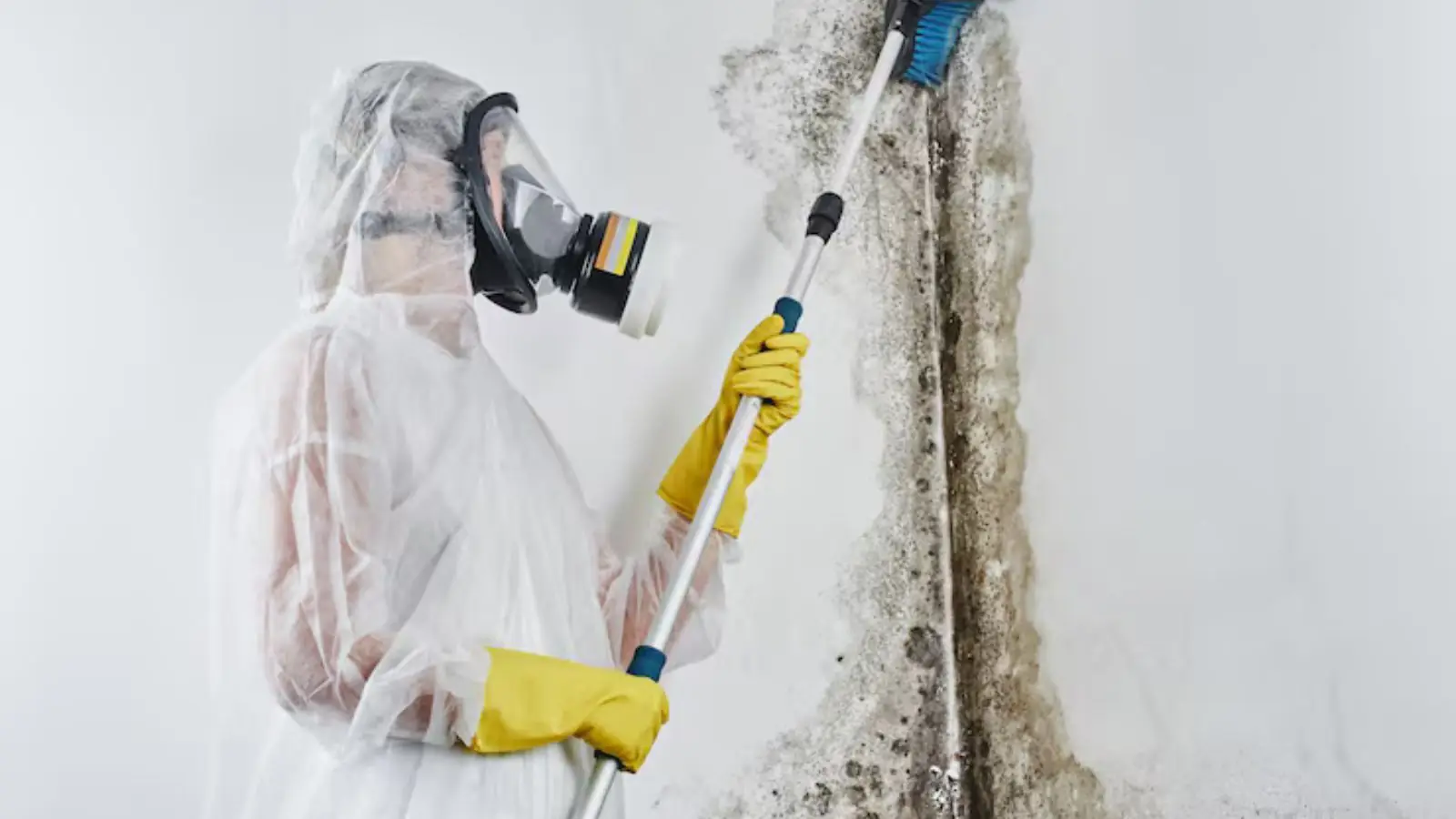
What a proper mold removal job includes
Details vary by building and by how far the mold spread, but the sequence below is what to expect from a legitimate mold remediation job.
- Find and fix the waterMold needs moisture. A leaking supply line, a roof leak or a condensate line backing up has to be repaired first, or the work will be repeated.
- Assess the extentMoisture meters and a thermal imaging camera map where materials are wet, including behind finishes the eye cannot see.
- Contain the areaPlastic sheeting, a sealed doorway and negative air pressure keep disturbed spores from spreading into clean rooms.
- Filter the airHEPA air scrubbers run during the work, and HEPA vacuums clean surfaces afterward.
- Remove porous materialsMoldy drywall, insulation, carpet and ceiling tile are cut out, bagged and removed. Wood framing is cleaned, sanded or treated as the situation requires.
- Dry the structureAir movers and dehumidifiers bring readings to normal, which is the same drying principle behind water mitigation.
- Verify the resultAn independent party performs post-remediation clearance testing, so the company that did the work is not grading itself.
Found mold after a leak?
Call (508) 446-9244 to describe it. Same-day response is offered when available, and scope and price are explained before work starts.
Questions to ask and what a good answer sounds like
Put these to every company you consider, and compare the answers rather than the totals.
| Question | A good answer | A weak answer |
|---|---|---|
| Do you fix or identify the water source? | Yes, or they tell you who to call first and wait for it to be fixed | They start removal while the leak is still running |
| Do you work to ANSI/IICRC S520? | Yes, and they explain containment and clearance | A vague answer or no answer |
| How will the area be contained? | Sheeting, negative air and HEPA filtration | Fans blowing across the room |
| What happens to porous materials? | Removed where affected, with a written scope | Sprayed and painted over |
| Who does clearance testing? | An independent third party | Their own technician, or nobody |
| Which Massachusetts requirements apply? | They can name them for the specific job | They say none apply without explaining |
Scope and price should be explained before work starts, and the written scope should say what is being removed, what is being cleaned and what the testing plan is.
Red flags to walk away from
Any one of these is reason enough to keep looking.
A promise that mold will never return
No honest company can say that. Mold returns when moisture does.
Bleach as the whole plan
Surface cleaning can remove staining on hard surfaces. It does not fix the leak, and it does not clean mold out of drywall or carpet.
No containment
Scrubbing or cutting without sealing the area can push spores into the rest of the building.
Testing by the same company
Ask who performs clearance. Independent testing keeps the result honest.
A price over the phone for an unseen room
Nobody can price what they have not assessed. Want your real number? Call (508) 446-9244.
Commercial space and older masonry buildings
Businesses face the same sequence with extra constraints: tenants, ventilation systems and neighboring units. A rented suite with a roof leak above it may need the landlord to repair the source before the tenant's contractor can finish. Ask the company how they will keep the HVAC from spreading disturbed material to other suites.
Large brick and masonry buildings add their own problems, such as thick walls that hold moisture, long plumbing runs and basements that stay damp. Mold removal there is often tied to water damage cleanup first, because the damp has to be dealt with before cleaning means much.
What Southbridge's mill-era buildings mean for mold work
Southbridge was shaped by the American Optical Company, which closed in 1984 and had more than 6,000 employees at its height. Before that, the Quinebaug River powered sawmills, gristmills and later textile mills, and mill-era buildings remain in town. This is general history and says nothing about the condition of any particular building.
The practical lesson is about size. Large old industrial and commercial buildings often have big roofs, long pipe runs and basements or lower levels next to a river. A leak can run unnoticed in a space nobody visits, so mold work on a building like that begins with a careful moisture survey, not a guess.
If you manage or lease space in an older building, ask any mold removal company how it will map moisture across the whole floor, how it will contain one section and who will perform clearance testing. Those three answers tell you more than the quoted total.
Frequently asked questions
Large patches, mold that returns after cleaning, mold behind finishes and any area tied to a big water loss usually call for a professional assessment. Ask for one if you are unsure. Health questions belong with your physician.
Not always. A visual and moisture assessment often shows where mold is growing. Testing before the work can help in some situations, and independent clearance testing after the work confirms the cleanup.
It is post-remediation verification by a party independent of the remediation company. The tester inspects the area and may take samples to compare with the standard the job plan set. It is a factual check, not a lender promise.
Often yes if the work area is properly contained, but it depends on the size of the job and who lives there. Ask the company during the assessment and speak with your physician about any health concerns.
Yes. Mold needs moisture, and removal without fixing the source tends to be undone. Ask the company whether it fixes the source or who to call.
It varies. Policies commonly treat mold that follows a sudden covered water loss differently from mold caused by long-term leaks or neglect. Check your policy and ask your insurer. We cannot promise a claim result.