
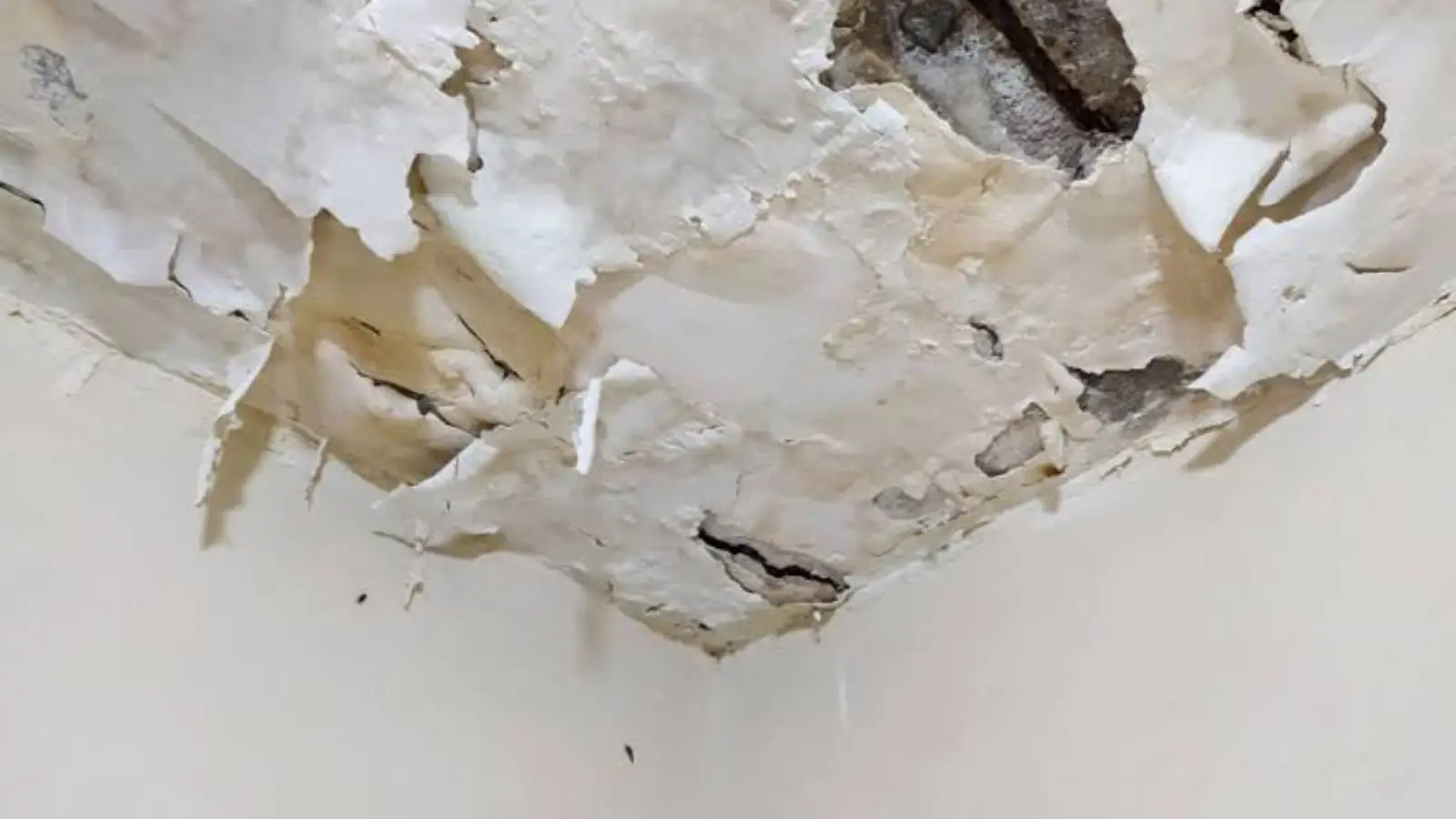
The short answer: dry, cut, patch, block, paint
Repair a water damaged ceiling in this order. Confirm the leak is fixed and the ceiling is dry, cut out anything sagging or soft, patch the opening, seal the stain with a stain-blocking primer, then paint. Skip the first step and the stain usually bleeds back through new paint within weeks.
Dry means a moisture meter reading close to an unaffected ceiling in the same house, not a surface that feels dry to the hand. Plaster and joists hold water for a long time. If the ceiling was wet for more than a day or two, water mitigation comes before any repair work.
The repair sequence, step by step
Each step below assumes the water source is already fixed. Rushing ahead to paint is the single most common reason a ceiling stain returns.
- Check that it is truly dryA pin or pinless moisture meter compares the stained area with a dry ceiling in another room. A thermal imaging camera shows cool, wet patches that the eye misses. Joists and subfloor above should read dry too.
- Cut out what failedDrywall that is soft, bubbled, crumbling or sagging comes down. So does plaster that has lost its grip on the lath. Cut back to solid, dry material and square the opening so the patch has clean edges to bond to.
- Deal with the insulation aboveFiberglass batts that stayed wet compress and lose their value, so they are replaced. Soaked cellulose usually comes out as well. Batts that were only briefly damp and are fully dry can sometimes stay.
- Patch the openingDrywall patches are screwed to new backing strips, taped, and finished with three thin coats of joint compound. Plaster patches use a base coat and finish coat, or a drywall plug skimmed to match the surface.
- Block the stainTwo thin coats of an oil-based or shellac-based stain-blocking primer cover the whole stain plus a few inches beyond it. Ordinary latex paint alone lets tannins and water marks ghost through.
- Paint the whole ceiling planeFlat ceiling paint rolled from wall to wall hides the repair. Painting only the patched spot leaves a visible halo, because new paint dries to a different sheen than old.
Patch or replace: a quick decision table
What you see on the ceiling points to what the repair will involve. This table covers the common cases after drying is confirmed.
| What you see | Likely cause of damage | Usual repair |
|---|---|---|
| Flat brown stain, surface firm | Short leak that dried quickly | Stain block and repaint, no patch |
| Stain with small bubbles or peeling paint | Moisture trapped under the paint film | Scrape, skim coat, prime, repaint |
| Soft spot that dents under a fingertip | Drywall paper and gypsum saturated | Cut out and replace that section |
| Visible sag or belly | Material has absorbed a lot of water | Remove the full sagging section |
| Plaster cracking or loose to the touch | Plaster keys broken from the lath | Re-secure with screws and washers, or replace |
| Fuzzy or dark growth on the surface | Moisture lasted long enough to feed mold | Stop and see mold remediation before sanding |
Anything in the last row should not be sanded or wiped dry, because that spreads spores through the room.
Ceiling sagging or dripping right now?
Call the 24/7 line before you touch it. Same-day response is offered when available, and scope and price are explained before work starts.
When to cut it out instead of patching
A ceiling that sags, bulges or drips is holding water or has lost its fastening, and it can drop without warning. Keep people out of the room beneath it, switch off power to any light fixture in the stained area only if the panel is dry and reachable, and do not push on it with your hands.
Cutting out is also the right call when the material stayed wet longer than 48 hours, when it smells musty, or when a screwdriver tip sinks in. Painting over a wet ceiling traps the moisture and hides the next stage of damage.
Plaster and drywall age differently
Drywall is gypsum between paper faces, and the paper is what fails first when wet. Once the paper loses its bond, the panel will not tighten back up, which is why sagging drywall nearly always gets replaced rather than rescued.
Plaster behaves the opposite way. Three coats of lime or gypsum plaster over wood lath can survive a leak that would ruin drywall, so a good plaster ceiling is often worth saving. The risk is hidden: water softens the plaster keys, the lumps of plaster pushed between the lath strips that hold it up.
Hiring help for the repair
Many ceiling repairs are a weekend job for a confident homeowner. If the opening is larger than a sheet of drywall, if wiring or recessed lights are involved, or if the ceiling is plaster, water damage repair by a licensed and insured crew saves time and avoids matching problems. In Massachusetts, ask the company which registration and license requirements apply to the job.
Ask for the scope in writing before work starts, including what is being removed, what is being rebuilt and how the stain will be sealed. If you want your real number, call (508) 446-9244 and describe the ceiling.
What Southbridge's plaster-era housing means for this
Southbridge is an old mill town. According to the town's 2024 draft hazard mitigation plan, about 38.5 percent of occupied housing units were built before 1939. The plan uses older Census figures, so read the number as a guide to the housing stock rather than an exact count.
In practical terms, a large share of local ceilings are probably plaster on wood lath, not drywall. After a leak, that means someone should tap the ceiling around the stain and listen for hollow, loose plaster, because broken keys can let a whole panel of plaster fall later even if the surface looks sound. The repair may be screws and washers to pull it back to the lath, or removal if it has crumbled.
If your house was built before the late 1970s, ask whoever does the work whether paint testing is needed before sanding or demolition. The same line that serves Southbridge dispatches crews to nearby towns such as Sturbridge and Oxford, where older homes follow the same drying and repair logic.
Frequently asked questions
There is no fixed number of days, because it depends on the material and how wet it got. Drywall may dry in a few days with air movers, while plaster and wet insulation can take longer. Wait for moisture meter readings that match a dry ceiling elsewhere in the house.
Ordinary paint will not hold it back. Tannins and mineral deposits come through latex paint, so the spot needs a stain-blocking primer first. And if the ceiling is still damp, even the primer will fail and the paint will peel.
With drywall, almost always. With plaster, sometimes the sag is a section that has pulled off the lath and can be re-fastened. A professional should look at it before you try, and the room below should stay empty meanwhile.
Often yes. Insulation that stayed wet compresses and holds moisture against the framing, which keeps the joists damp. Insulation that dried fast and shows no staining or smell can sometimes stay, but the crew should confirm it with a meter.
Sudden and accidental water damage is often covered, while gradual leaks and neglect often are not. Check your policy, ask your insurer, and keep photos of the ceiling before anything is cut out. Nobody can promise approval in advance.
Plaster hangs on keys that squeeze between wood lath strips, and water can soften or break them. A loose-feeling ceiling may need screws and washers to re-secure it or removal of the failed part. Stay out from under it until it has been checked.