
The short answer
Restoration cost depends on five things: the category of the water, how much of the home is wet, which materials soaked it up, how many days of drying equipment the structure needs, and how much rebuilding follows. Change any one of them and the total moves.
That is why a phone quote for "a wet basement" means little. A clean supply-line leak that wet one bathroom floor and a sewage backup that reached a finished basement are two different jobs, even if both start with the words "water damage."
The sections below break down each factor, show what a scope normally contains, and explain what you should hear before anyone plugs in a machine. If you want to talk through your own situation, the 24/7 line at (508) 446-9244 is answered by a person.
The five cost factors, and what to ask about each
Use this table as a list of questions. A professional who has walked the job should be able to answer every row.
| Cost factor | How it changes the job | Question to ask |
|---|---|---|
| Water category | Category 1 (clean supply water) is the simplest. Category 2 and 3 add removal of porous materials, protective gear and sanitizing under ANSI/IICRC S500. | Which category is this, and how did you decide? |
| Affected area | Two damp rooms differ from a wall that wicked water two feet up. Moisture readings, not eyesight, set the boundary. | Can I see the moisture map? |
| Materials | Hardwood, plaster, carpet pad, blown-in insulation and fiberboard cabinets each dry or fail in their own way. | What can be dried in place and what must come out? |
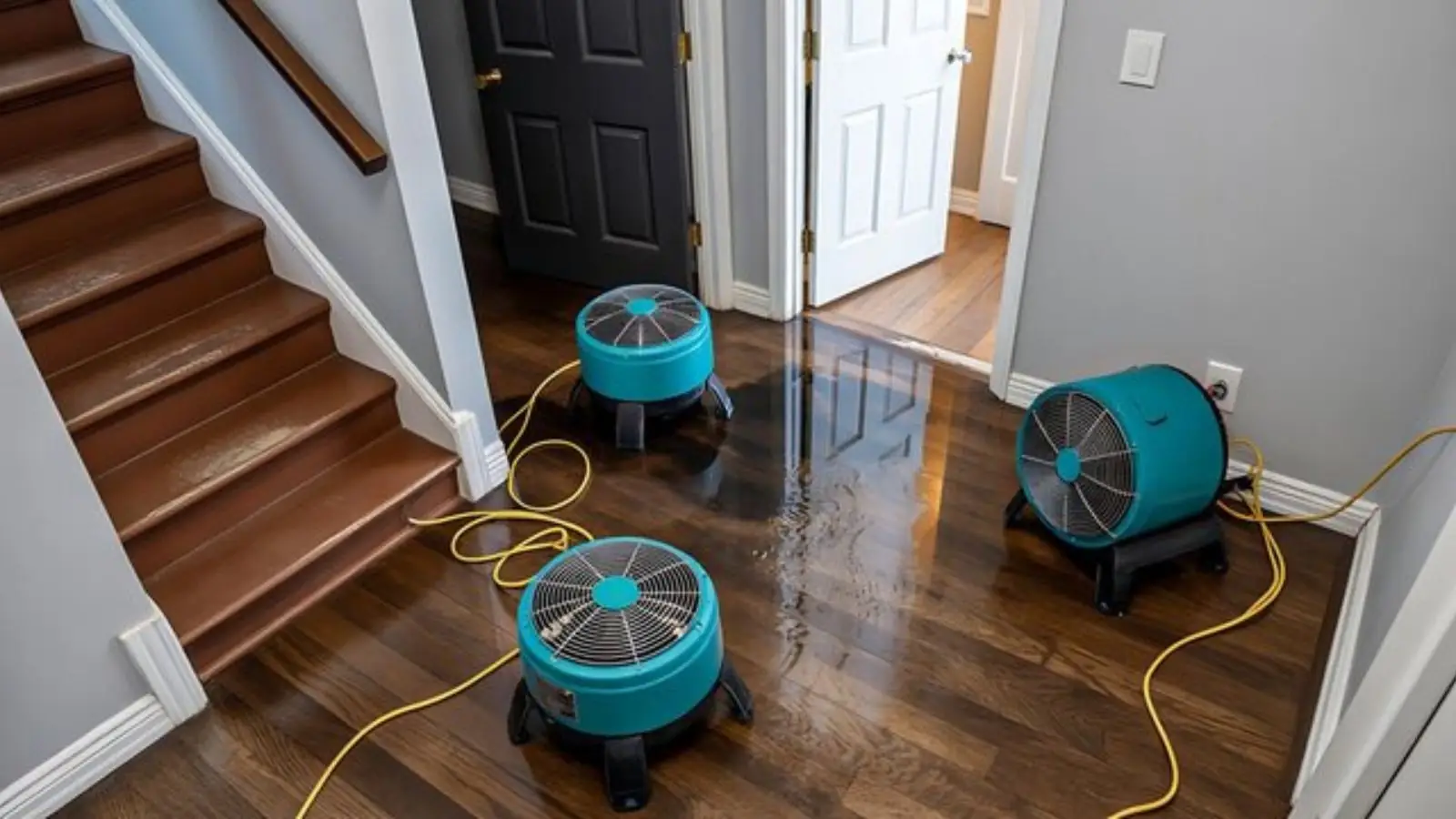
| Drying days and equipment | Air movers, LGR dehumidifiers and sometimes injection drying panels run for days, and each unit adds to the daily total. | How many units, and how many days do you expect? |
| Rebuild scope | Drywall, insulation, flooring and paint are priced from what was removed, and usually come after the structure reads dry. | Is rebuild included, or a separate scope? |
The first four rows belong to the emergency phase. The fifth belongs to repair, and many homeowners decide on it only after drying is done.
What a written scope usually includes
A good scope reads like an inventory of work, not a single lump. Look for these items before you sign anything.
- Assessment: moisture meter readings, a thermal imaging scan for hidden wet spots, and the water category.
- Extraction: pumps or truck-mounted extraction units for standing water, plus the rooms they cover.
- Removal: wet carpet pad, saturated drywall, insulation or other materials that cannot be dried, listed room by room.
- Drying plan: the number of air movers and dehumidifiers and the daily monitoring visits that track readings.
- Cleaning: antimicrobial treatment and deodorizing where the water category calls for it.
- Documentation: photos, readings and a written scope you can give your insurer.
If a quote lists only a total and the words "water damage work," ask for the breakdown.
Want your real number? Call.
Every hour water sits in carpet pad and drywall adds to the scope. Call (508) 446-9244 and a professional will explain how the price is set for your home.
What is usually not in the first scope
Three jobs get lumped together on the phone, and each one has its own scope. Knowing the split keeps a surprise off the final bill.
Stopping the water
A plumber fixes the broken pipe or failed valve. Restoration handles what the water did afterward, and the two are billed separately.
Drying the structure
Water mitigation covers the first 24 to 72 hours of extraction, equipment and monitoring.
Rebuilding
Water damage repair replaces drywall, flooring and paint. It is priced after demolition shows what is left.
Prevention
Waterproofing, grading and drainage work keep future water out. That is a different trade, and restoration is not a substitute for it.
How scope and price should be explained before work starts
The order matters more than the number. Here is the sequence a homeowner should expect.
- You describe the waterSource, rooms, how long it has been wet, and whether anything electrical or sewage-related is involved.
- A professional walks the jobMeters and an infrared camera find the wet materials, including ones behind finished walls.
- The scope is written downEach room and each material is listed, with what comes out and what stays to dry in place.
- The price method is explainedYou hear which items are fixed, which depend on drying days, and what would change the total.
- You decideWork starts after you understand the scope. Cleanup under a water damage cleanup scope can begin the same day when conditions are urgent.
Red flags in any quote
Be careful with a number given over the phone before anyone has seen the home, a request for the full amount up front, or pressure to sign on the spot. Ask whether the crew works to ANSI/IICRC S500 and whether they will show you drying readings each day. A company that welcomes those questions is usually one that expects to be measured.
What Massachusetts contractor registration means for your quote
In Massachusetts, a contractor doing work on an existing owner-occupied home of one to four units generally must hold a Home Improvement Contractor (HIC) registration from the Office of Consumer Affairs and Business Regulation. Some exemptions exist, such as certain small jobs under $500. Structural work may also call for a Construction Supervisor License.
Here is the practical consequence for a Southbridge homeowner. The state Guaranty Fund can pay up to $25,000 of actual losses if a registered contractor does the work badly or abandons it, but it cannot cover a contractor who was never registered. Before you accept a rebuild scope, ask for the registration and check it on the state's lookup.
The HIC page does not address mold work, so for a mold job ask the company which Massachusetts requirements apply to it. Drying and extraction can be handled separately from rebuilding, and your questions should cover each part.
Frequently asked questions
Not an honest one. The person answering can explain how the price is built and what would raise or lower it, but the real number comes after the damage has been measured.
Usually the scopes differ. One may remove carpet pad and baseboards while the other dries in place, or one may run six air movers for three days and the other four for five. Compare line by line, not by total.
It can, because equipment days are a cost factor. Daily moisture readings show whether the structure is on track, and a professional should tell you about a change before it happens, not on the invoice.
Often it is a separate scope. Extraction, drying and cleanup come first, and rebuilding is priced once demolition shows what remains. Ask whether the quote covers water damage repair or stops at dry.
Sudden and accidental damage, such as a burst pipe, is often covered, while gradual leaks and neglect often are not, and flood damage usually needs separate flood coverage. Check your policy or ask your insurer. We document the loss but cannot promise a claim outcome.
The rule covers work on existing owner-occupied homes of one to four units, so an owner-occupied three-family generally falls inside it. Ask the contractor which requirements apply to your job, and do the same if your project is in Sturbridge or Webster.